
In this guide
Plants are one of the few decorating elements that bring texture, color, and movement simultaneously—but placement matters as much as the plant itself. A fiddle-leaf fig shoved in a corner it barely fits does less for a room than a smaller plant given space to breathe in the right spot. Research published in the Journal of Physiological Anthropology found that interaction with indoor plants reduces psychological and physiological stress—the case for having them is well-documented. The case for placing them well is purely visual, and it’s where most people underinvest.
This guide covers how to size plants to rooms, how grouping works and when to use it, how to create visual hierarchy with plants across different heights, and the placement mistakes that flatten a room instead of adding depth.
Scale First: Match Plant Size to Room Size
The single most common mistake is buying plants that are too small for the space. A 6-inch pothos on a living room floor reads as clutter; on a bookshelf, it’s an accent. Interior designers generally size statement floor plants at one-third to two-thirds the height of the ceiling—Architectural Digest guidance. In a room with 9-foot ceilings, a floor plant between 3 and 6 feet creates proportion. Anything smaller disappears.
The rule applies in reverse for tight spaces. A 7-foot tree in a 200-square-foot room with 8-foot ceilings feels like it’s competing with the furniture. The plant should enhance the space, not dominate it.
Pot size also affects perceived scale. A large plant in a pot that looks too small looks precarious. The pot diameter should generally be one-third to one-half the visual height of the plant above the soil line. Terra cotta and ceramic pots read as heavier and more grounded; lightweight plastic pots and thin-rimmed containers make the plant look less deliberate.
Plant Roles: Focal Points, Support, and Detail
Every room benefits from thinking about plants in three tiers, the same way a styled bookshelf works: a dominant element, supporting pieces, and small accents.
Focal Point Plants
These are the plants that anchor a space—large enough to draw the eye and significant enough to hold it. Fiddle-leaf figs, bird-of-paradise, rubber trees, and large Monstera deliciosa are common choices because of their size and strong visual silhouette. They work best in corners, beside a sofa or armchair, or flanking a fireplace. A focal plant needs enough surrounding space to read as intentional—crowded by furniture, it loses the visual weight that makes it effective.
Supporting Plants
Mid-size plants—2 to 4 feet—fill the space between floor plants and tabletop accents without competing for attention. A snake plant beside a console table, a pothos cascading off a side table, a ZZ plant at the end of a bookshelf. These plants contribute texture and color while deferring to the dominant piece. They’re the easiest category to overdo—two or three well-chosen supporting plants outperform seven plants fighting for the same visual space.
Accent Plants
Small plants—under 2 feet—work as detail elements on surfaces: windowsills, coffee tables, nightstands, desk edges. A single small succulent on a windowsill reads as sparse. Three or four small plants in varied containers and heights read as a considered collection. The grouping principle is what transforms accents from afterthoughts into design elements.
Plant Size Reference
| Plant Size | Height Range | Typical Role | Placement |
| Statement / floor plant | 4–8 feet | Focal point, room anchor | Corner, beside sofa, flanking a fireplace |
| Mid-size | 2–4 feet | Supporting element | Side table, console, shelf end |
| Small / tabletop | Under 2 feet | Accent, detail | Windowsill, coffee table, bookshelf |
| Trailing / hanging | Variable | Texture, vertical interest | High shelf, hanging planter, top of cabinet |
Grouping: When Plants Work Better Together
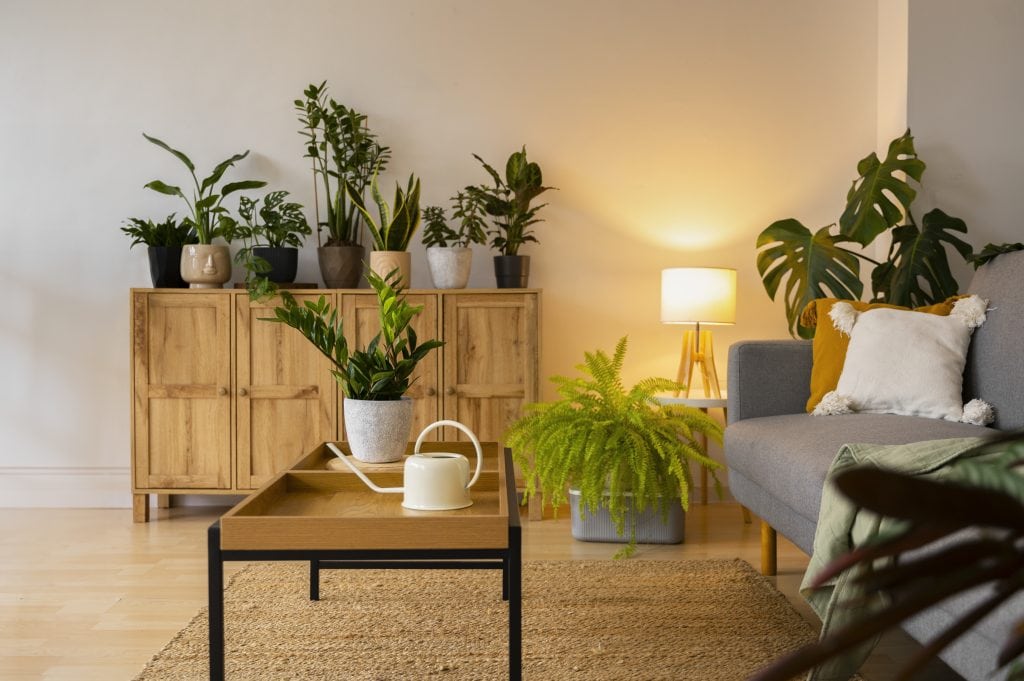
Grouping plants creates visual mass and a sense of abundance that isolated plants rarely produce. The odd-number rule from design theory—groups of three, five, or seven—reads more naturally to the eye than even-numbered arrangements, which tend to feel symmetrical and static. Three plants of varied heights grouped together creates visual rhythm; three plants of identical height looks like a product display.
For groupings to work, at least one of the three criteria needs to vary: height, pot size, or leaf texture. A tall trailing plant, a mid-size bushy plant, and a small upright succulent grouped on a sideboard create interest because each contributes something different. Three tall, leafy plants in matching pots grouped together create mass but no variation.
Groupings also serve a practical purpose: plants that share similar humidity needs do better together, and clustering them creates a small zone of higher humidity through collective transpiration. Humidity-loving plants—calathea, ferns, orchids—benefit from being near each other rather than isolated.
Height and Layering
A room styled with plants at only one height looks flat, regardless of how many plants are in it. The goal is variation across three vertical zones: floor level, furniture level (28–36 inches), and high or hanging level (above eye level or suspended from the ceiling).
High placement uses space that most rooms leave empty. A trailing plant on top of a 7-foot bookcase or a hanging pothos above an armchair draws the eye upward and makes the room feel taller. The trailing element adds movement—as the plant grows, it changes the room’s visual texture over time without requiring any repositioning.
The floor-to-ceiling range works best when the plant sizes transition logically: a large floor plant anchors the corner, a mid-size plant on the side table beside it provides the middle layer, and a hanging plant overhead completes the vertical range. This layered arrangement takes up roughly the same floor footprint as the large plant alone but occupies the room’s vertical space far more effectively.
Room-by-Room Placement Logic
Living Rooms
The largest room in most homes supports the most visual ambition. A focal floor plant in the corner behind or beside the main seating provides a natural backdrop. Plants on coffee tables work best in low, wide vessels—tall plants on a coffee table block sightlines across the room. A trailing plant high on a bookshelf adds the upper layer without taking floor space.
Bedrooms
Scale down slightly from living room sizing. A medium floor plant in the corner—a rubber tree, a peace lily—adds presence without overwhelming a smaller space. Bedrooms benefit from plants with softer, rounded leaf shapes rather than sharp architectural silhouettes; the visual impression is calmer. Nightstand plants should stay small—something that fits without competing with a lamp.
Kitchens
Kitchens have the practical advantage of humidity and, often, a south-facing window. Herbs in pots on a windowsill—Better Homes & Gardens recommends basil, rosemary, and chives for kitchen windowsills—serve a functional purpose alongside the aesthetic one. Small plants on open shelves work well in kitchens because they’re easily moved when the shelves are in active use.
Bathrooms
Bathrooms with a window support plants that thrive in humidity—ferns, pothos, peace lilies, orchids. Without a window, the options narrow significantly; most plants need some natural light to sustain themselves. A trailing pothos on a high bathroom shelf works in near-dark conditions better than most. Keep sizing modest—bathroom counters are already cluttered, and a large plant in a small bathroom competes with function.
Mistakes That Work Against the Room
- One plant per surface. Scattering single plants across every flat surface creates visual noise rather than intention. Group them instead.
- All the same height. Even a collection of beautiful plants reads as flat if they all sit at the same eye level. Vary heights deliberately.
- Pots that don’t coordinate. Every plant in a different style, color, and material competes with itself. Two or three pot styles across a room is enough variety. Matching at least one element—material or color—pulls a grouping together.
- Ignoring the negative space. Plants need surrounding space to read as intentional. A plant jammed into a corner with no clearance looks like it ran out of room. Give statement plants 12–18 inches of clear space around them.
- Placing trailing plants at floor level. Trailing plants—pothos, string of pearls, heartleaf philodendron—are designed to cascade downward. On the floor, they spread laterally and create tripping hazards. Elevated to a shelf or hanging planter, the trailing becomes a feature.
Bottom Line
Scale and placement matter more than plant count. One large, well-placed floor plant in the right corner outperforms five small plants randomly distributed across the same room. Work in three tiers—floor, furniture, and high or hanging. Group small plants in odd numbers with varied heights and textures. Give statement plants room to breathe. The room should feel like the plants belong in it, not like the plants were added to an existing room.
Sources
Every external claim in this guide links to its origin. Collected automatically from the text above.
- Research published in the Journal of Physiological Anthropology — link.springer.com
- Interior designers generally size statement floor plants at one-third to two-thirds the height of the ceiling — architecturaldigest.com
- The odd-number rule from design theory — furnitureacademy.com
- Herbs in pots on a windowsill — bhg.com

Jane McKenna
Jane covers interior design, room-by-room planning, and the organizational side of home improvement for Decor Modern. Her articles help homeowners decide how a space should look and function before they start buying materials. Jane's path to home improvement writing started in set design for small theater productions in New England — a job that taught her how to make any room feel intentional on almost no budget. She transitioned into residential interior consulting, working with homeowners on kitchen layouts, bedroom makeovers, and practical space planning that doesn't require an architect. After five years of in-person consultations, she began writing to reach people who couldn't afford a designer but still wanted thoughtful guidance. Over the course of her consulting work, she has worked with dozens of homeowners on kitchen layouts, bedroom redesigns, and space planning decisions — often within tight budgets and existing structural constraints. On Decor Modern, she writes the interior design styles guide, the bedroom and living room articles, and the kitchen remodel planning series. Her approach is pragmatic: she cares more about whether your kitchen layout actually works for cooking than whether it follows a trend. Her work focuses on functional design — layouts that improve how a space is actually used day-to-day, not just how it looks in photos. Jane is based in Connecticut, in a 1920s colonial that she and her husband have been updating room by room since they bought it — "slowly, and with a lot of opinions from each other."