

In this guide
- 1. Change the Locks
- 2. Locate Every Shutoff Valve
- 3. Test Every Smoke and CO Detector
- 4. Find the Electrical Panel and Label Every Circuit
- 5. Clean the Dryer Vent
- 6. Service the HVAC System
- 7. Check the Water Heater
- 8. Inspect and Clean the Gutters
- 9. Know What Your Homeowner's Insurance Actually Covers
- 10. Build a Basic Home Maintenance Calendar
- Bottom Line
Moving into a house hands you responsibility for systems and equipment the previous owners may have neglected for years. Some of these items have direct safety consequences. Others prevent the kind of expensive damage that catches new homeowners completely off guard. None are complicated. Most take under an hour.
Work through this list in the first twelve months. A few are urgent enough to do before the first night.
1. Change the Locks
The previous owners had keys. Their contractors had keys. Their dog walker had keys. Anyone who got a copy over the years of ownership still has it. Changing the locks on every exterior door costs $20 to $50 per lock for a quality deadbolt installed yourself, or $100 to $200 per lock if a locksmith does it.
Rekeying—having a locksmith change the internal mechanism to work with a new key—costs less than replacing the entire lock. Schlage and Kwikset both offer rekeyable deadbolts that let homeowners rekey themselves with a kit that comes with the lock. Either way, do this before the first night.
2. Locate Every Shutoff Valve
Water damage is the second most common homeowner insurance claim. Knowing where to cut the water before a pipe bursts or a fixture fails is the difference between a manageable repair and a flooded room.
Find the main shutoff valve first—it’s usually near where the water supply enters the house, often in the basement, crawl space, or utility room. Then locate the individual shutoffs under every sink, behind every toilet, and at the water heater. The average water damage claim runs $11,098—Insurance Information Institute data. A shutoff valve found in 30 seconds prevents most of that.
Label any valve that isn’t already labeled. A Sharpie on a piece of tape does the job. Make sure every adult in the household knows where the main shutoff is and which direction turns it off.
3. Test Every Smoke and CO Detector
Press the test button on every smoke and carbon monoxide detector in the house. Replace batteries in any that don’t respond. The NFPA reports that 3 out of 5 home fire deaths occur in homes with no working smoke alarms. Most fire deaths happen at night when residents are asleep—a working detector provides the time to escape.
Carbon monoxide detectors have a lifespan of 5 to 7 years. The Consumer Product Safety Commission recommends replacing CO detectors every 5 to 7 years. If the house came with detectors of unknown age, replace them. CO poisoning is odorless and colorless—the detector is the only warning.
Install detectors on every floor, outside each sleeping area, and inside bedrooms where people sleep with doors closed. The NFPA guidelines provide specific placement recommendations.
4. Find the Electrical Panel and Label Every Circuit
Open the main electrical panel and look at the labels inside the door. In older homes they’re often wrong, incomplete, or missing. Knowing which breaker controls which area of the house is essential for safe electrical work and useful during any outage or appliance problem.
Map it: plug a lamp into an outlet, go to the panel, and flip breakers one at a time until the lamp goes off. Label that breaker. Repeat for every circuit. It takes 30 to 45 minutes with a helper. Keep a copy of the map photographed in your phone.
Check the panel age while you’re there. Federal Pacific Electric Stab-Lok and Zinsco panels, common in homes built between the 1950s and 1980s, have documented failure rates and are flagged by many home inspectors as safety risks. If either brand appears on the panel, consult a licensed electrician.
5. Clean the Dryer Vent
Lint builds up in the duct that carries hot air from the dryer to the exterior vent. The US Fire Administration reports roughly 2,900 dryer fires per year, with lint buildup as the leading cause. Most of these fires are preventable.
Disconnect the dryer from the wall, detach the duct from the back, and use a dryer vent brush kit—available for $20 to $30—to clean the full length of the duct from inside. Clear the exterior vent flap of any lint or debris. The brush kit handles most residential duct runs. Longer or more complex runs may need a professional cleaning service.
Do this annually from this point forward, or more often if the dryer takes more than one cycle to dry a load—a warning sign that airflow is restricted.
6. Service the HVAC System
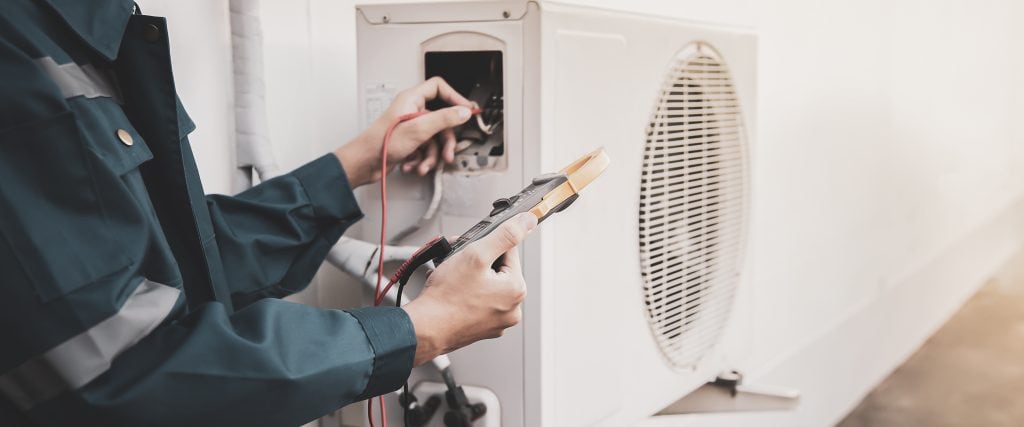
The previous owners may not have changed the air filter in months. A clogged filter reduces airflow, makes the system work harder, and shortens equipment life. The Department of Energy recommends changing filters every 1 to 3 months depending on filter type and household conditions (pets, dust, occupants). Change it now, then mark a calendar reminder.
Schedule a professional HVAC inspection if one wasn’t part of the home inspection, or if the home inspection flagged anything about the system. An annual tune-up runs $75 to $150 and keeps the warranty valid on newer equipment. Find when the system was last serviced by checking for a service sticker on the equipment—often stuck to the side of the furnace or air handler.
7. Check the Water Heater
Look for the manufacture date on the water heater’s label—it’s typically on a sticker near the top of the unit. Most water heaters last 8 to 12 years—Department of Energy data. One within a few years of that range is worth budgeting for replacement.
Check the temperature setting. The dial on most water heaters is set to 140°F at the factory. The CPSC recommends 120°F to prevent scalding—especially relevant in households with young children or elderly residents. The adjustment takes seconds.
Look for rust-colored water at hot taps, water pooling around the base, or a rumbling noise during heating—all signs of an aging unit that may fail soon. Drain a quart from the valve at the base annually to clear sediment.
8. Inspect and Clean the Gutters
Gutters clogged with leaves, debris, and compacted material force water to overflow at the roofline instead of draining away from the foundation. The National Association of Home Builders identifies improper drainage as a leading cause of foundation problems. Foundation repairs run $5,000 to $50,000+ depending on severity—far more than gutter maintenance.
Clean the gutters in the first fall after moving in, and in spring. Check that downspouts extend at least 4 feet from the foundation. If they terminate at the foundation wall, add a downspout extension—they cost $10 to $20 and direct water away before it can pool.
Walk around the house during a heavy rain and watch where water goes. Low spots that channel water toward the foundation, grading that slopes toward the house, and window wells without drains are all worth addressing before the first wet season.
9. Know What Your Homeowner’s Insurance Actually Covers
Most homeowners never read their policy until after a loss—then discover the exclusions. The average homeowners claim runs $13,191—Insurance Information Institute data. Flood damage and earthquake damage are excluded from standard policies. Sewer backup is excluded in many. Jewelry, art, and electronics often hit sub-limits that are well below replacement value.
Read the policy in the first month. Note the deductible, the dwelling coverage limit, and the personal property limit. Make sure the dwelling coverage is enough to rebuild at current construction costs—not the purchase price. Construction costs have risen significantly since most policies were originally written. If the replacement cost seems low, request an updated appraisal.
10. Build a Basic Home Maintenance Calendar
A house has seasonal maintenance requirements that new homeowners often don’t know about until something fails. The most important recurring tasks:
- Monthly: Check HVAC filter, test smoke and CO detectors, clear debris from exterior vents.
- Spring: Clean gutters, service the AC, check roof for winter damage, inspect caulk around windows and doors, test outdoor faucets after the freeze season.
- Fall: Clean gutters again, service the furnace, shut off exterior hose bibs before the first freeze, check weatherstripping on doors.
- Annually: Clean dryer vent, flush water heater sediment, check attic for moisture or pest activity, test GFCI outlets in bathrooms and kitchen, inspect the roof from the ground for missing shingles.
Deferred maintenance is the most expensive category of home repair. Homeowners who follow a regular maintenance schedule spend significantly less on emergency repairs than those who don’t—Consumer Reports. The schedule takes 30 minutes to set up and runs itself from there.
Bottom Line
The first year of homeownership establishes habits and reveals what the house actually needs. Change the locks, find the shutoffs, test the detectors, label the panel—these tasks take an afternoon and prevent the kind of surprises that define the first year for unprepared owners. The maintenance calendar turns those first tasks into a system that protects the investment for years after.
Sources
Every external claim in this guide links to its origin. Collected automatically from the text above.
- Schlage — schlage.com
- Kwikset — kwikset.com
- The average water damage claim runs $11,098 — iii.org
- The NFPA reports that 3 out of 5 home fire deaths occur in homes with no working smoke alarms — nfpa.org
- The Consumer Product Safety Commission recommends replacing CO detectors every 5 to 7 years — cpsc.gov
- Federal Pacific Electric Stab-Lok and Zinsco panels, common in homes built between the 1950s and 1980s — ajlongelectric.com
- The US Fire Administration reports roughly 2,900 dryer fires per year — usfa.fema.gov
- The Department of Energy recommends changing filters every 1 to 3 months — carrier.com
- Most water heaters last 8 to 12 years — goldbergplumbing.com
- The National Association of Home Builders identifies improper drainage as a leading cause of foundation problems — nahb.org
- Homeowners who follow a regular maintenance schedule spend significantly less on emergency repairs — dennisroofingsc.com

Jane McKenna
Jane covers interior design, room-by-room planning, and the organizational side of home improvement for Decor Modern. Her articles help homeowners decide how a space should look and function before they start buying materials. Jane's path to home improvement writing started in set design for small theater productions in New England — a job that taught her how to make any room feel intentional on almost no budget. She transitioned into residential interior consulting, working with homeowners on kitchen layouts, bedroom makeovers, and practical space planning that doesn't require an architect. After five years of in-person consultations, she began writing to reach people who couldn't afford a designer but still wanted thoughtful guidance. Over the course of her consulting work, she has worked with dozens of homeowners on kitchen layouts, bedroom redesigns, and space planning decisions — often within tight budgets and existing structural constraints. On Decor Modern, she writes the interior design styles guide, the bedroom and living room articles, and the kitchen remodel planning series. Her approach is pragmatic: she cares more about whether your kitchen layout actually works for cooking than whether it follows a trend. Her work focuses on functional design — layouts that improve how a space is actually used day-to-day, not just how it looks in photos. Jane is based in Connecticut, in a 1920s colonial that she and her husband have been updating room by room since they bought it — "slowly, and with a lot of opinions from each other."