In this guide
Machine cleaning—either renting an extractor or hiring a professional—is the most thorough way to clean carpet. But machines aren’t always accessible, and a professional clean isn’t always in the budget. Professional cleaning is recommended every 12 to 18 months. Between sessions, most soil, odor, and surface buildup can be handled without any equipment beyond what’s already in the house.
This guide covers the manual methods that actually work—what each one does, how to apply it correctly, and the mistakes that make carpet worse rather than cleaner.
Start With Vacuuming—Twice
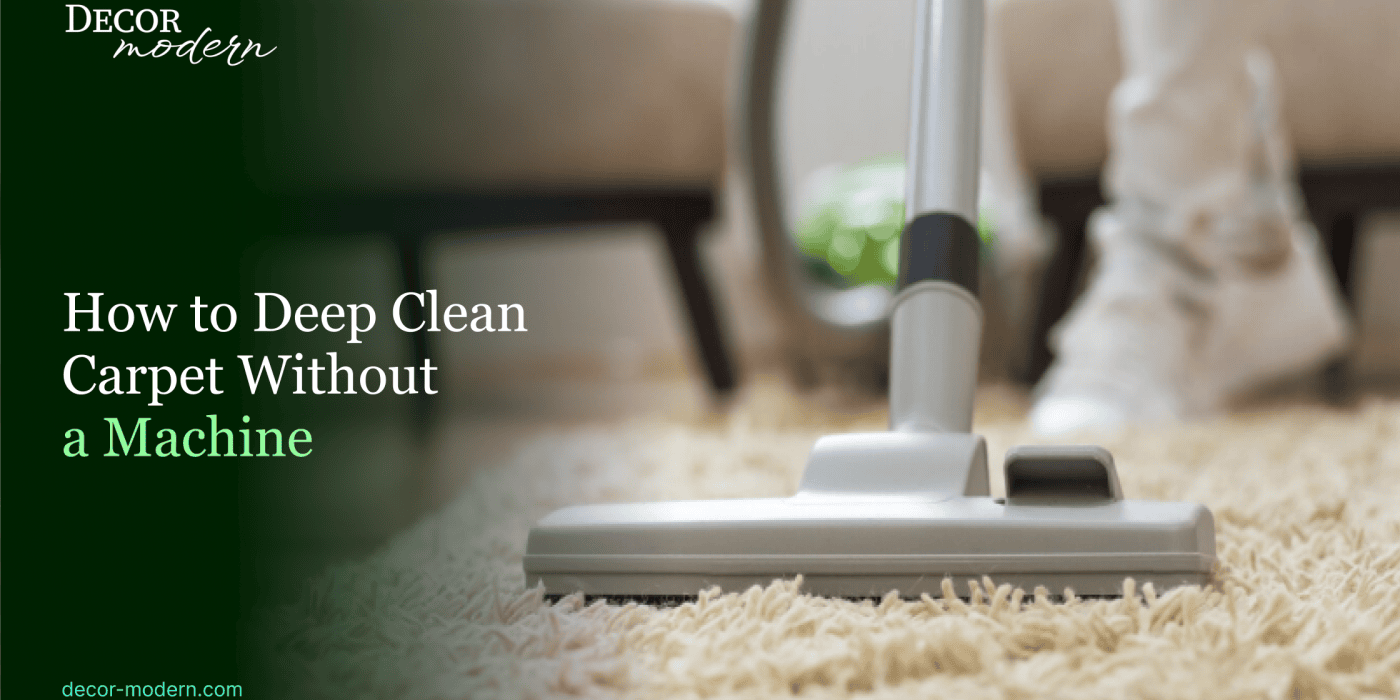
Skip the cleaning products until the carpet is vacuumed—twice. Dry soil sitting in the fibers mixes with any cleaning liquid and turns into a paste that works its way deeper into the pile. The Carpet and Rug Institute recommends vacuuming high-traffic areas daily and the full carpet at least weekly. Before any deep clean, run the vacuum in two directions to pull up as much loose debris as possible.
Slow passes produce better results than fast ones. A vacuum moved slowly over the carpet has more time to pull debris from deeper in the pile. Quick back-and-forth passes mostly clean the surface layer. This matters more before a manual clean than during routine vacuuming—the goal is to remove everything dry before any liquid touches the fibers.
What Baking Soda Does to Carpet
Baking soda absorbs odors and loosens dry soil. It doesn’t clean in the way a detergent does—it doesn’t lift grease or break down protein stains. But for general freshening and odor removal, it’s effective and safe on virtually any carpet type.
Sprinkle a generous layer over the carpet. Work it gently into the fibers with a stiff brush or the back of a broom—contact with the pile is what enables absorption. Leave it for at least 30 minutes. For stronger odors, leave it overnight. Vacuum thoroughly afterward. Multiple passes in different directions lift the baking soda from the pile without leaving a chalky residue.
For pet odors specifically, baking soda is a starting point but not a complete solution. The American Kennel Club notes that enzyme-based cleaners are required to break down the uric acid in urine—baking soda masks the odor without eliminating the source. For surface odors from cooking, smoke, or general use, baking soda works well without leaving any residue.
Dry Cleaning Powder: Faster Than Baking Soda
Commercial dry carpet cleaning powders — brands like Host and Capture—contain a blend of solvents, detergents, and absorbent materials. They work differently from baking soda: the solvents dissolve soil and the absorbent carrier material pulls it out of the fiber when vacuumed. The Carpet and Rug Institute’s Seal of Approval program tests and certifies cleaning products that are safe for residential carpet. CRI-certified dry powders are the safest option for frequent use.
Sprinkle the powder over the carpet following the product instructions—typically a thin, even layer. Work it into the fibers with a brush. Leave for the time specified on the packaging, usually 30 minutes. Vacuum thoroughly. The powder carries the dissolved soil out with it.
Dry powder is better suited to lightly soiled carpet than heavily soiled carpet. It handles routine maintenance and traffic-area buildup well. It doesn’t penetrate deeply enough to address stains that have reached the carpet backing or pad. For those, a liquid method is necessary.
Dish Soap and Water: The Manual Scrub
A small amount of dish soap in warm water produces a cleaning foam that works on surface stains and general traffic-area soil. The key word is small—too much soap leaves a residue in the carpet that attracts new dirt faster than the cleaned area did before.
Mix one teaspoon of clear dish soap into one cup of warm water. Apply the foam to the carpet with a clean cloth—don’t pour the liquid directly onto the carpet. Work from the outside edge of the soiled area toward the center to prevent spreading. Blot, don’t rub. The IICIICRCRC’s cleaning standards consistently emphasize blotting over rubbing—rubbing drives soil deeper into the pile and damages carpet fibers through friction.
After treating the area, blot with a clean cloth dampened with plain water to remove soap residue. Residual soap in carpet fibers attracts soil—a spot cleaned with dish soap that isn’t thoroughly rinsed will look dirty again faster than the surrounding carpet. Press dry towels onto the area and weigh them down with something heavy to draw moisture up from the pile. Change the towels as they absorb moisture.
White Vinegar Solution: Odors and Residue
White vinegar diluted with water—equal parts, mixed in a spray bottle—addresses two specific problems: odors and residue left by other cleaning products. It’s also one of the lowest-risk cleaning agents for carpet because it leaves no detergent residue of its own.
Spray lightly onto the affected area—don’t saturate. The goal is a damp surface, not a wet one. Leave for 5 to 10 minutes, then blot with a clean cloth. The vinegar smell fades completely as the carpet dries. A fan pointed at the area speeds drying and prevents the musty smell that comes from carpet left damp for more than a few hours.
Vinegar is not a disinfectant at this dilution. The EPA’s list of registered disinfectants doesn’t include diluted white vinegar. It removes odors and light residue effectively—but shouldn’t be used as a substitute for an EPA-registered disinfectant when sanitization is the goal.
Don’t Soak the Carpet
Too much liquid is the most common manual cleaning mistake. Carpet backing and the pad beneath it dry slowly. The EPA’s mold guidance puts mold growth on damp materials at 24 to 48 hours under the right conditions. Wet carpet in a low-airflow room is exactly those conditions.
The rule for any liquid method: use the least moisture that gets the job done. Apply solution to the cloth—not straight onto the carpet. Blot instead of pouring. Press dry towels onto the area afterward to pull moisture up from the pile. Open a window, point a fan at it, or run a dehumidifier. If the carpet still feels damp four to six hours later, keep the fan on it.
Method Reference
| Method | Best for | What to know |
| Baking soda treatment | Odors, light soil, freshening | Leave 30 min to overnight; vacuum thoroughly after |
| Dry carpet powder | Overall refresh, light dirt | Work in with brush; vacuum after 30 min |
| Dish soap + water foam | Surface stains, traffic areas | Minimal water; blot, don’t rub; dry fast |
| White vinegar solution | Odors, mild stains, residue removal | Dilute 1:1 with water; test first; air dry |
| Club soda | Fresh spills—wine, juice | Pour, let fizz, blot immediately |
| Hydrogen peroxide (3%) | Stubborn stains on light carpet | Test first — may lighten darker fibers |
When Manual Cleaning Isn’t Enough
Manual methods handle routine maintenance, surface stains, and odor control effectively. They don’t replace machine cleaning for deep-seated soil, allergen removal, or stains that have soaked into the backing and pad. The IICRC recommends hot water extraction—commonly called steam cleaning—as the most effective residential carpet cleaning method. Rental extractors run $30 to $50 per day at most hardware stores. Professional cleaning typically costs $120 to $350 per room depending on size and soil level.
Carpet that gets manual attention between professional cleanings is easier and faster for the cleaner to handle—and the result is noticeably better. Skipping the maintenance and waiting for the machine clean produces a harder job and a less dramatic improvement. The two approaches work better together than either does on its own.
Bottom Line
Deep cleaning carpet without a machine is possible and effective for routine maintenance, odor control, and surface stains. Start with two thorough vacuum passes. Use baking soda or dry powder for freshening. Use minimal moisture for any liquid-based method. Blot rather than rub. Remove soap residue thoroughly. Dry the carpet fast. Manual methods keep carpet in better condition between professional cleanings—but they don’t replace them. For deeply soiled carpet or anything that’s reached the pad, a machine is the right tool.
Sources
Every external claim in this guide links to its origin. Collected automatically from the text above.
- is recommended — carpet-rug.org
- The American Kennel Club notes — akc.org
- The Carpet and Rug Institute's Seal of Approval program — carpet-rug.org
- The IICIICRCRC's cleaning standards — iicrc.org
- The EPA's list of registered disinfectants — epa.gov
- The EPA's mold guidance — epa.gov

Jane McKenna
Jane covers interior design, room-by-room planning, and the organizational side of home improvement for Decor Modern. Her articles help homeowners decide how a space should look and function before they start buying materials. Jane's path to home improvement writing started in set design for small theater productions in New England — a job that taught her how to make any room feel intentional on almost no budget. She transitioned into residential interior consulting, working with homeowners on kitchen layouts, bedroom makeovers, and practical space planning that doesn't require an architect. After five years of in-person consultations, she began writing to reach people who couldn't afford a designer but still wanted thoughtful guidance. Over the course of her consulting work, she has worked with dozens of homeowners on kitchen layouts, bedroom redesigns, and space planning decisions — often within tight budgets and existing structural constraints. On Decor Modern, she writes the interior design styles guide, the bedroom and living room articles, and the kitchen remodel planning series. Her approach is pragmatic: she cares more about whether your kitchen layout actually works for cooking than whether it follows a trend. Her work focuses on functional design — layouts that improve how a space is actually used day-to-day, not just how it looks in photos. Jane is based in Connecticut, in a 1920s colonial that she and her husband have been updating room by room since they bought it — "slowly, and with a lot of opinions from each other."