

In this guide
Unsealed window drafts cause a range of household problems. Your heating system can overexert and drive up your energy bills. That’s why drafts should be eliminated. However, these evil air leaks are easy to fix without calling a pro and spending a lot of money.
Why Do Windows and Doors Get Drafty?
Most drafts develop slowly as your home gets older. Weatherstripping can lose its flexibility, caulk can crack from temperature changes, and small gaps may appear as the house settles. Sometimes, poor installation leaves unsealed spaces between frames and walls. Older single-pane windows also let out more heat than newer double- or triple-pane windows, even if they seem to close fine.
Finding Air Leaks
Before spending any money, find out where cold air is actually getting in. On a cold or windy day, run your hand slowly along window frames, door edges, and thresholds—any chill means you’ve found a draft. You can also hold a lit incense stick near the spots you’re unsure about: if the smoke drifts sideways or pulls toward the window or door, air is leaking through.
Focus on checking:
- Window frames.
- Door jambs.
- Thresholds.
- Corners where trim meets walls.
- Around exterior doors.
Choosing Materials for Sealing Drafts
Different problem spots call for different fixes:
- Moving parts—doors, sliding windows—need weatherstripping. Foam tape is the budget-friendly option and easy to put in, while V-strip holds up better in spots that see a lot of use.
- Stationary gaps around frames are a job for caulk. Acrylic latex is fine indoors and takes paint well; for exterior gaps, silicone or siliconized acrylic is the better pick since it handles moisture and temperature swings.
- Larger gaps behind trim are best filled with low-expansion spray foam—it fills the space without putting pressure on the frame.
- In winter, window insulation film gives older windows an extra layer of protection.
Eliminating Air Leaks
- Pull out the old caulk or worn weatherstripping first, then clean the surfaces thoroughly—dirt and moisture will both prevent adhesives from bonding.
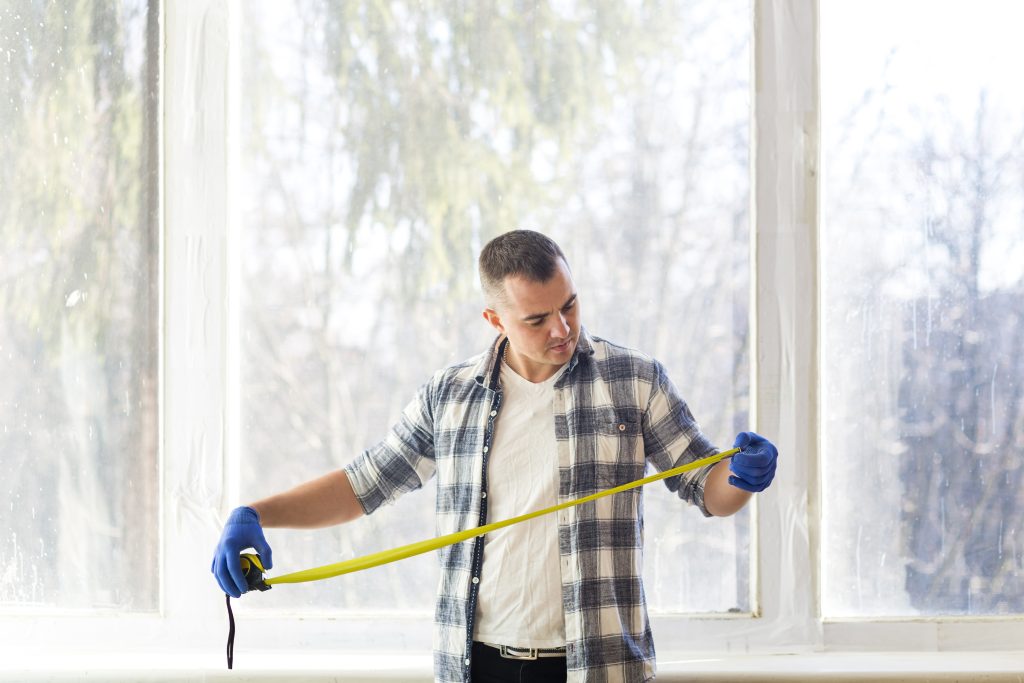
- Measure and cut the new weatherstripping to length. It should compress when the door or window closes, but not so much that opening it becomes a struggle.
- Run caulk around fixed gaps in one steady, continuous bead and smooth it right away before it skins over. Leave any moving parts alone.
- If cold air is getting under an exterior door, a door sweep will close the gap—snug enough to seal, loose enough that the door still swings freely.
- For hidden gaps wider than a quarter inch, work low-expansion foam into the space between the wall and frame. Once it cures, trim off the excess and cover any exposed foam with caulk or trim.
Getting It Right Next Time
A lot of DIY repairs don’t hold up simply because the wrong materials went in. Indoor caulk on exterior joints, for instance, will crack within a season. Sealant applied over a dirty or damp surface won’t last either. And standard expanding foam is a poor choice around windows—it can over-expand and throw off how the window operates. Stick to products made specifically for windows and doors.
Repair vs Replace
Some problems go beyond simple sealing. Condensation between glass panes, wood rot, warped frames, or windows that won’t close properly are all signs that repairs won’t cut it—at that point, replacement makes more sense. New energy-efficient windows insulate better and tend to bring heating and cooling costs down over time.
Conclusion
Drafty windows or doors can be fixed on your own with quite cheap materials. A well-sealed house stays warmer during the winter and cooler in summer, it saves energy costs an average of 15% and doesn’t overload your heating system. Check your windows and doors at least once a year and replace the old seals before they fail.
Sources
Every external claim in this guide links to its origin. Collected automatically from the text above.
- develop slowly — energy.gov
- weatherstripping — energy.gov
- stays warmer during the winter and cooler in summer — energy.gov
- an average of 15% — energystar.gov

John Adams
John writes about home systems — HVAC, plumbing, electrical, and water heaters — for Decor Modern. His articles help homeowners understand the infrastructure behind their walls before something breaks and the repair bill arrives. John's background is in residential maintenance and facilities management. He spent six years overseeing day-to-day upkeep of multi-unit residential properties, handling everything from boiler failures to bathroom renovations. He was responsible for maintaining building systems across multiple residential units, including HVAC, plumbing, and electrical infrastructure. He learned the hard way that most homeowner emergencies start as small problems that nobody noticed in time — which is why his articles focus as much on diagnosis and prevention as on repair. His experience includes diagnosing system failures, coordinating repairs, and managing preventative maintenance to avoid costly emergencies. On Decor Modern, he's the author of the HVAC 101 and Plumbing 101 guides, the water heater warning signs article, and the bathroom renovation cost breakdowns. His approach: explain the system first, then the fix, then the cost. In that order. He focuses on helping homeowners recognize early warning signs before small issues turn into major repairs. John is based in North Carolina, where summer humidity gives him no shortage of material to write about.