10 Warning Signs of a Bad Water Heater Every Homeowner Should Know in 2026

What Are the Signs of a Water Heater Going Bad?Most signs of a bad water heater show up weeks or months before total failure. Water heaters rarely quit without warning. Tank water heaters last 8 to 12 years, while tankless models can reach 15 to 20 years with proper maintenance[-5]. Only when we are willing to recognize hot water heater problems symptoms early can you avoid emergency breakdowns and water damage that can get pricey. This piece covers 10 warning signs your water heater is going out, what tools you need to diagnose each issue, and when you can handle it yourself versus when to call a professional.

Why Recognizing Signs of a Failing Water Heater Matters in 2026

Image

Image Source: Mattioni Plumbing

The Cost of Ignoring Water Heater Problems

Water heater replacement in January 2026 starts at USD 1,586 to USD 1,843 for simple mid-range work. The total breaks down in a predictable way: the unit itself accounts for 40-50% of costs, and labor takes 35-40%. Permits plus inspections run 10-15%. Permits cost USD 50 to USD 250, with inspection fees adding another USD 50 to USD 150.

Addressing signs of a bad water heater early costs substantially less. A faulty thermostat repair runs USD 100 to USD 300. Heating element replacement costs USD 200 to USD 400. Tank flushing to remove sediment buildup costs USD 100 to USD 200. Minor repairs left unaddressed force the unit to work harder. This raises monthly utility bills and accelerates wear.

Water damage presents another financial risk. Small leaks turn into flooding, especially problematic since water heaters sit in out-of-the-way locations. You might not notice moisture accumulation. Mold growth follows water exposure and creates health risks alongside expensive remediation costs.

Safety hazards escalate with neglect. Gas-powered units may leak carbon monoxide, a colorless gas. Faulty pressure relief valves or corroded tanks increase explosion risks under extreme pressure conditions. According to the U.S. Department of Energy, approximately 27 million homes have water heaters older than 10 years. This means millions of households face these potential dangers.

A failing water heater kills deals or reduces offers substantially when you sell your home. A new unit won’t add resale value dollar-for-dollar, but it prevents inspection failures. It can justify a modest price increase of USD 500 to USD 1,000.

Who This Guide Is For

You’ll benefit from this guide if you own a tank or tankless water heater and notice any hot water heater problems symptoms. It’s also useful if you want to catch problems before emergency replacements become necessary. Homeowners with units approaching the 10-year mark for tanks or 15-year mark for tankless models should pay special attention to signs your water heater is going out.

What You’ll Learn From This Article

Each warning sign section explains what causes the problem and how to diagnose it yourself. You’ll learn what tools you need and when professional help becomes necessary. You’ll get specific cost ranges for repairs versus replacement, safety considerations for each problem, and clear differences between DIY-friendly tasks and high-risk work requiring licensed technicians.

Strange Noises Coming From Your Water Heater

Image

Image Source: Mother

Your water heater makes popping sounds that resemble popcorn cooking in a microwave. Rumbling noises shake the unit like a covered pot boiling over on the stove. These aren’t normal operating sounds and indicate specific problems that need attention.

What Causes Popping, Banging, and Rumbling Sounds

Sediment buildup at the tank’s bottom causes most water heater noises. Hard water contains calcium and magnesium minerals that separate during heating and settle as residue. This layer thickens over months and traps water underneath, right where the heating element sits.

The element heats this trapped water until it boils and creates steam bubbles. These bubbles burst through the sediment layer and produce the popping or rumbling sounds you hear. The noise intensifies as sediment accumulates and turns gentle pops into loud banging.

This buildup forces your heating element to work harder. It wastes energy and wears components faster. Excess heat trapped under sediment can warp the tank or burn out elements. Water heater failures cost an average of USD 4,444 per incident after deductibles, making it worth intervening early.

How to Diagnose the Noise Problem

Listen to determine when the noise occurs. Popping during heating cycles confirms sediment buildup. A banging sound when water shuts off indicates water hammer, where water flows back through pipes forcefully.

Check your water pressure using a gage attached to the nearest faucet. Pressure above 80 psi causes knocking sounds and requires a pressure-reducing valve. High pressure also stresses joints and creates leaks over time.

What Tools You Need to Inspect Your Water Heater

You need a garden hose to flush, a pressure gage (USD 10 to USD 20), and a flashlight to inspect the tank. Flushing removes sediment and costs USD 100 to USD 200 when hiring professionals.

When to Call a Professional

Flush your tank yourself if comfortable with plumbing tasks. Turn off power or gas, let water cool, attach a hose to the drain valve, and flush until water runs clear. This takes 30 to 60 minutes in most tanks.

Call a professional if noises persist after flushing, if you notice gas leaks (hissing sounds on gas models), or if the heating element needs replacement. Licensed technicians can inspect tank lining damage and test water quality. Gas line problems require professional attention immediately as a safety measure.

Rusty or Discolored Hot Water

Image

Image Source: Plumber Adelaide

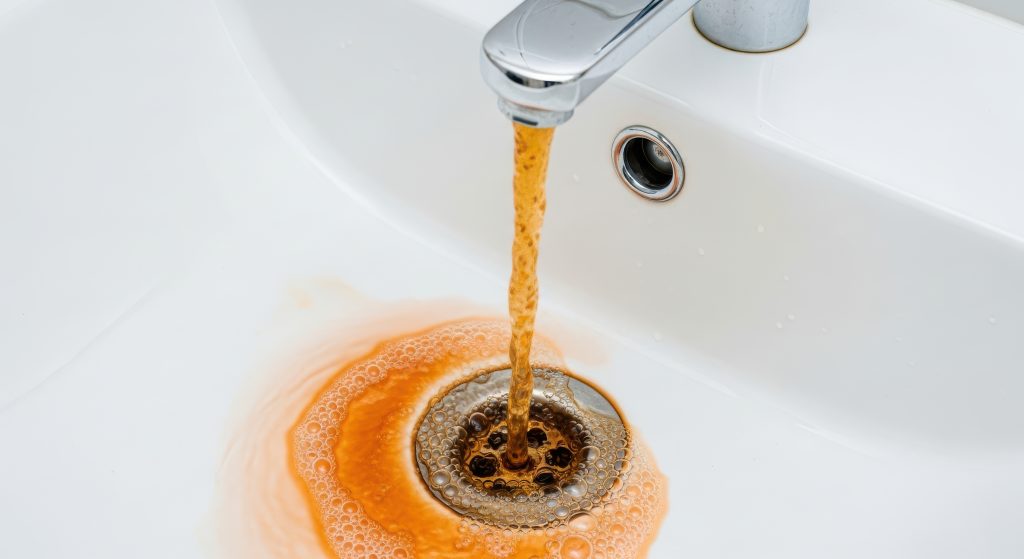
Brown or reddish water flowing from your faucets signals one of the clearest signs your water heater is going out. This discoloration stems from rust particles breaking off inside your tank and mixing with your hot water supply.

What Causes Rust-Colored Water

Water heater corrosion occurs when microscopic cracks develop in the glass lining that protects the steel tank interior. Iron oxide forms once water contacts exposed steel in the presence of oxygen. Water temperature and acidity accelerate this chemical reaction.

Your water heater contains a sacrificial anode rod designed to corrode instead of the tank walls. This rod attracts corrosive minerals and lasts 5 to 8 years before complete depletion. Rust attacks the unprotected steel tank directly after the anode rod fails. Water heaters show rust after 5 to 7 years, though water quality and maintenance habits affect this timeline.

Sediment from minerals like calcium and magnesium settles at the tank bottom over time. This buildup combines with rust particles and further discolors your water. Hard water with high mineral content speeds up the corrosion process.

How to Tell If Hot Water Heater Is Bad vs. Pipe Issues

Run this diagnostic test. Turn on a hot water tap and fill a glass. The water appears brown only from hot taps while cold water runs clear. This confirms your water heater causes the problem. Your home’s galvanized steel pipes are corroding instead if both hot and cold water show discoloration.

Check multiple faucets throughout your home. Rust-colored water from separate locations points to the water heater as the source. You might notice the discoloration appears strongest first thing in the morning after rust particles settle overnight.

What Tools You Need to Test Your Water

Fill several clear glasses with hot and cold water from different faucets to compare visually. This costs nothing and takes five minutes. Water testing kits are available if you want to measure specific contaminants, though visual inspection is enough to diagnose rust.

When to Call a Professional

Flushing your tank removes sediment-related discoloration and costs USD 100 to USD 200. Replacing a depleted anode rod extends tank life if caught early and runs USD 200 to USD 400 for parts and labor.

But rust coming from the tank walls cannot be repaired. The tank will eventually fail and leak once internal corrosion starts. Replacement becomes necessary, especially when you have units older than 8 to 10 years that show rust. Continuing to use a corroded tank risks leaks and potential water damage to your home.

Inconsistent or Lukewarm Water Temperatures

Water that moves from lukewarm to scalding within seconds ranks among the most frustrating signs of a bad water heater. This inconsistency happens when your thermostat fails to read temperatures with accuracy or when heating elements malfunction.

What Causes Temperature Fluctuations

Your thermostat controls heating cycles by monitoring water temperature and triggering elements as needed. Water alternates between cold, lukewarm and dangerously hot when it malfunctions. A thermostat stuck on continuous heating produces scalding water that exceeds safe levels.

Heating element failure creates different symptoms. Lukewarm water signals one element has burned out and reduced your heater’s capacity to reach desired temperatures. Your tank heats only the top half if the lower element fails. This gives you shorter hot water cycles. Total element failure leaves you with no hot water whatsoever.

Sediment buildup insulates heating elements from water and forces them to overheat while water stays cooler. This creates temperature inconsistencies and triggers high-limit switches over and over. Hard water accelerates this buildup, especially when you have areas without water softeners.

How to Diagnose Thermostat and Heating Element Issues

Turn off power at the circuit breaker first. Remove the access panel with a screwdriver and inspect for visible damage like burn marks or loose connections. Test incoming power with a multimeter set to voltage mode and confirm electricity reaches the unit.

Check continuity across terminals when testing the thermostat. No continuity indicates a faulty thermostat that needs replacement. Testing heating elements follows a similar process using the multimeter’s resistance setting. Readings between 20-30 ohms suggest a stuck lower thermostat. Readings under 1 ohm indicate stuck contacts.

Hot water should reach at least 50°C (122°F) within one minute of running the tap. Measure temperature at multiple faucets to confirm the heater causes the problem rather than individual fixtures.

What Tools You Need for Temperature Testing

You need a multimeter (USD 20 to USD 50), screwdriver set, insulated gloves and a flashlight. A water thermometer helps verify output temperatures against thermostat settings. Having replacement thermostats on hand speeds repairs if testing confirms failure.

When to Call a Professional

DIY thermostat and element testing works if you’re comfortable with electrical work. Replacement thermostats cost USD 100 to USD 300 installed. Heating elements run USD 200 to USD 400. But working with 240-volt systems carries shock risks. Call a licensed technician if you’re uncertain about electrical safety, if multiple components fail at once, or if temperature problems persist after thermostat adjustment.

Visible Leaks or Moisture Around the Unit

Image

Image Source: Nicholson Plumbing, Heating & Air Conditioning

Water heater leaks account for 69% of all water heater failures and cause either slow drips or sudden catastrophic bursts. Each incident costs homeowners an average of USD 4,444 in water damage, repairs, and replacement. Small puddles around your unit signal serious problems that need immediate attention.

What Causes Water Heater Leaks

Corrosion breaks down metal components over time and creates holes that allow water to escape. Your sacrificial anode rod corrodes within 4 to 6 years and leaves the tank vulnerable to mineral attacks. Once the rod reaches its steel core, corrosive minerals attach directly to tank walls and cause leaks or bursts.

Loose pipe connections develop from thermal expansion and general wear. These connection points leak water and need tightening or component replacement. Faulty drain valves leak when loose or damaged beyond repair. Hard water accelerates this deterioration through mineral accumulation that causes additional corrosion.

Excessive water pressure stresses the system and ruptures tanks while creating leaks at plumbing connections. Pressure above 80 psi needs a pressure-reducing valve installation. Sediment collection from hard water minerals causes overheating, which cracks the tank’s inner lining and produces leaks from the bottom. Age compounds these issues since water heaters lasting 8 to 20 years develop component failures that show up as leaks.

How to Identify the Source of the Leak

Start by ruling out condensation, which forms when room temperature is different from tank temperature. Wipe suspect areas with a dry cloth and check if moisture returns within minutes.

Leaks from the top indicate loose pipe fittings at hot and cold water inlets. Inspect connections with a paper towel to detect dampness. Leaks from the side originate from the temperature and pressure relief valve, caused by excessive heat or pressure buildup. Water dripping from the T&P valve’s discharge pipe confirms this source.

Leaks at the base signal serious internal problems, often from corroded tanks or faulty drain valves. Water pooling here means replacement rather than repair.

What Tools You Need to Inspect for Leaks

You need paper towels to detect moisture, a flashlight to inspect closely, and an adjustable wrench to tighten connections. A bucket catches water during testing. These simple tools cost under USD 30 total.

When to Call a Professional

Tighten loose fittings yourself if comfortable with simple plumbing. But call a licensed plumber for tank corrosion, persistent leaks after simple fixes, or any gas-related concerns. Internal tank deterioration cannot be repaired and needs full replacement. Gas leaks present fire risks and demand professional intervention without delay.

Sudden Increase in Energy Bills

Water heating consumes 18% of your utility bill and ranks as the second largest energy expense in your home. Your water heater likely suffers from efficiency problems that drain your wallet each month if this percentage climbs without increased usage.

What Causes Rising Utility Costs

Sediment buildup forces heating elements to work longer and consume extra electricity to maintain temperature. A failing heating element or thermostat malfunction triggers the same prolonged heating cycles and raises costs even if your hot water usage stays constant. Units aged 10 to 15 years experience declining efficiency as components wear out.

Leaks waste heated water and force the system to reheat replacement water that enters the tank. Poor insulation allows heat to escape and prompts more frequent heating cycles that pile up energy charges. Temperature settings above 120°F increase costs by 3-5% for every 10-degree increment.

How to Calculate Your Water Heater’s Energy Consumption

A typical electric water heater uses 4,000 watts and runs about 3 hours daily. Calculate your consumption using this formula: kWh = watts × hours used ÷ 1,000. To cite an instance, 4,000 watts × 3 hours ÷ 1,000 = 12 kWh per day. That’s USD 1.20 daily or USD 36.50 monthly at USD 0.10 per kWh.

Compare your actual bill to this baseline. Major deviations indicate inefficiency that requires attention.

What Tools You Need to Monitor Energy Usage

Plug-in watt meters cost USD 20 to USD 30 and measure energy use for individual devices. Residence-wide monitors installed in your breaker panel run about USD 300 and track whole-home consumption patterns. These devices identify abnormal appliance behavior and help calculate total repair costs versus replacement.

When to Call a Professional

Monitor your own usage first using simple calculation methods or affordable plug-in meters. Call a technician if bills climb 15-20% without explanation, if multiple efficiency issues appear at once, or if your unit exceeds 10 years old and shows other bad water heater signs.

Reduced Hot Water Supply or Capacity

Running out of hot water mid-shower signals one of the most common signs your water heater is going out. Your morning routine turns cold after five minutes. Your water heater doesn’t deal very well with capacity or efficiency problems.

What Causes Insufficient Hot Water

Sediment accumulation reduces your tank volume by a lot. A 50-gallon tank holds only 40 gallons after several inches of mineral deposits settle at the bottom. This sediment layer insulates heating elements from water and forces longer heating cycles while delivering less hot water.

A broken dip tube creates sudden capacity drops. This plastic pipe directs incoming cold water to the tank’s bottom and allows hot water to draw from the top. The tube cracks or disintegrates. Cold water mixes with hot water at the top right away and gives you brief hot bursts followed by lukewarm flow.

Failed heating elements reduce output. Electric heaters use two elements. The bottom element handles maintenance heating. The element burns out and only the top portion heats, cutting your supply in half. Water heaters lasting 8 to 12 years decline in efficiency as components wear.

Tank size mismatches cause chronic shortages. A household of five exhausts a 40-gallon tank fast, while two people find it sufficient. Like that, increased usage from new appliances or family members overwhelms undersized units.

How to Diagnose Sediment Buildup and Capacity Issues

Flush your tank once a year to remove sediment. Attach a garden hose to the drain valve, turn off power and empty the tank. Sediment appears as sand-like particles in the discharge water.

Test heating elements with a multimeter set to the Ohm setting. Readings around 14 ohms indicate proper function. No reading means the element failed and needs replacement.

What Tools You Need to Test Water Output

You need a garden hose, multimeter (USD 20 to USD 50) and basic hand tools for element testing.

When to Call a Professional

Flushing sediment costs USD 100 to USD 200. Dip tube replacement remains inexpensive but this is a big deal as it means that you get better performance. Heating element replacement runs USD 200 to USD 400. Call a technician for element replacement, persistent capacity issues after flushing or units exceeding 10 years with multiple failures.

Your Water Heater Has Exceeded Its Expected Lifespan

Age remains one of the most reliable predictors of water heater failure, yet many homeowners wait too long to address this factor.

How Long Does a Water Heater Last

Tank water heaters last 8 to 12 years on average. Tankless models extend this timeline and reach 15 to 20 years with proper maintenance. Indirect-fired units achieve similar longevity at 15 to 20 years when maintained with care. Electric tank models edge out gas units by 2 to 3 years.

Water quality affects these timelines substantially. Hard water reduces lifespan by up to 30% through accelerated mineral buildup. Annual tank flushing and anode rod replacement every 3 to 5 years protect against premature failure[392].

How to Determine Your Water Heater’s Age

The manufacturer’s label on the tank side shows the installation date. If missing, decode the serial number. Bradford White uses the first letter for year and second letter for month. A.O. Smith places year in the first two digits and week in the second two. Rheem and Ruud format as MMYY, so “0521” means May 2021.

When Replacement Makes More Sense Than Repair

Units over 10 to 12 years old experiencing recurring problems should be replaced. Any repair exceeding USD 450 on a unit over five years old signals replacement time. Upgrading makes financial sense when repair costs hit 30 to 50 percent of replacement cost.

Cost to Replace vs. Repair a Water Heater

Repairs range from USD 150 to USD 500. Replacement costs USD 800 to USD 2,500 including installation. Newer models deliver better efficiency and reduce monthly utility bills while offering 10-year warranties on hybrid electric models.

Low Water Pressure From Hot Water Taps

Image

Image Source: Standard Heating, Cooling & Plumbing

Weak hot water flow while cold water runs strong points to problems within your hot water system rather than your main supply line.

What Causes Low Hot Water Pressure

Sediment buildup inside your tank restricts water flow and reduces pressure throughout your home. Minerals like calcium and magnesium accumulate over time and block internal components and the outlet pipe. Normal water pressure ranges from 45 to 80 PSI. Anything below 45 PSI shows a problem that needs attention.

Mineral deposits don’t just affect your tank. They collect inside hot water pipes and narrow the pathway, choking off flow. Galvanized steel pipes in older homes corrode from the inside out, and hot water accelerates this deterioration. Partially closed shut-off valves near your water heater reduce flow by a lot, especially to multiple fixtures. Faulty pressure regulators fail over time and decrease pressure if located after the water heater.

How to Diagnose Pressure Problems

Test hot water at multiple taps throughout your home. Your water heater causes the issue if only hot water shows weak pressure while cold runs normal. Attach a pressure gage to an outdoor faucet with all other fixtures turned off for an accurate reading. Gradual pressure reduction points to sediment buildup or small leaks, while sudden drops point to recent malfunctions.

What Tools You Need to Test Water Pressure

A standard water pressure gage costs USD 10 to USD 20 and screws onto any outdoor spigot.

When to Call a Professional

Flushing your tank removes sediment and costs USD 100 to USD 200. Call a technician for persistent low pressure after basic fixes, when multiple fixtures show problems at once, or if you suspect corroded pipes that need hydro jetting.

Foul-Smelling or Metallic-Tasting Hot Water

A rotten egg odor or metallic taste in your hot water happens when bacteria interact with your water heater’s internal components. This sulfur smell occurs only in hot water while cold water remains odor-free, confirming your water heater as the source.

What Causes Bad Smells and Taste

Hydrogen sulfide gas produces the rotten egg smell when sulfate bacteria consume the magnesium anode rod. Your anode rod lasts 3 to 5 years before bacteria create this reaction. Metallic taste signals the anode has corroded and exposed steel components to water.

Legionella bacteria multiply faster between 95°F and 115°F. This bacterium runs when thermostats stay below 120°F. Your water heater at 60°C (140°F) prevents Legionella growth.

How to Test for Bacterial Growth and Anode Rod Failure

Test hot versus cold water at multiple taps. Smell present only in hot water confirms bacterial growth inside your tank. Drain several gallons through the drain valve and check for sediment or foul odor.

What Tools You Need to Address Water Quality Issues

Flushing requires a garden hose and takes one hour. Hydrogen peroxide or bleach added to the tank kills bacteria. Let the solution sit 3 to 4 hours before flushing.

When to Call a Professional

Replace your anode rod every 3 to 5 years at USD 200 to USD 400. Odors that persist after flushing require professional disinfection or aluminum anode installation.

Frequent Repairs and Recurring Problems

Multiple calls for water heater repairs within 12 months signal one of the clearest bad water heater signs requiring replacement rather than continued fixes.

What Causes Repeated Water Heater Failures

Wear and tear accounts for 27% of all water heater failures. Units over 10 years old operate with reduced efficiency and near the end of usable life. Sediment buildup, corrosion, and component wear happen inside the tank where you can’t see damage accumulating. These issues create a cascade effect where fixing one problem stresses other aging components and leads to the next breakdown.

How to Calculate Total Repair Costs vs. Replacement

You should track every service call in the last year. Typical repairs range from USD 150 to USD 600. Upgrading makes financial sense when total repair costs exceed 30 to 50 percent of replacement price.

When Continued Repairs No Longer Make Financial Sense

A single affordable repair on a functioning unit provides immediate value. But repeated service calls add up fast and sometimes exceed new unit costs. You should replace when repair costs approach replacement cost.

Cost and Time Estimates for Replacement

Replacement runs USD 1,000 to USD 2,500 including installation. Standard tank replacements take 3 to 6 hours under favorable conditions.

Comparison Table

Comparison Table: Water Heater Warning Signs

Warning SignMain CauseDIY DiagnosisTools NeededRepair Cost RangeWhen to Call ProfessionalReplacement Indicator
Strange Noises (Popping, Banging, Rumbling)Sediment buildup trapping water under heating element; water hammer from high pressureListen during heating cycles; check water pressure with gageGarden hose, pressure gage ($10-$20), flashlight$100-$200 for flushingIf noises persist after flushing, gas leaks present, or heating element needs replacementNot usually, unless tank lining is damaged
Rusty or Discolored Hot WaterCorroded tank interior from depleted anode rod (5-8 years); sediment buildupRun hot water at multiple taps; compare to cold water in clear glassesClear glasses for visual comparison; water testing kit (optional)$100-$200 for flushing; $200-$400 for anode rod replacementWhen rust comes from tank walls (not fixable); units 8-10+ years old showing rustYes – internal tank corrosion cannot be repaired
Inconsistent or Lukewarm Water TemperaturesFaulty thermostat; burned-out heating element; sediment insulating elementsTest with multimeter for continuity; measure water temperature at taps (should reach 122°F within 1 minute)Multimeter ($20-$50), screwdriver set, insulated gloves, flashlight, water thermometer$100-$300 for thermostat; $200-$400 for heating elementIf uncomfortable with 240-volt electrical work; multiple component failures; persistent issues after adjustmentThink about it if multiple components fail at once
Visible Leaks or Moisture Around UnitTank corrosion (anode rod depleted in 4-6 years); loose connections; faulty drain valve; excessive pressure (>80 PSI)Rule out condensation with dry cloth test; inspect top (pipe fittings), side (T&P valve), and base (tank/drain valve) with paper towelsPaper towels, flashlight, adjustable wrench, bucketVaries by source; tightening connections is minimal costRight away for tank corrosion, persistent leaks after simple fixes, or gas-related concernsYes – leaks from tank base indicate internal corrosion that requires replacement
Sudden Jump in Energy BillsSediment forcing longer heating cycles; failing heating element/thermostat; leaks; poor insulation; temperature set above 120°FCalculate consumption: kWh = watts × hours ÷ 1,000; compare to baseline (usual: 12 kWh/day or $36.50/month at $0.10/kWh)Plug-in watt meter ($20-$30) or whole-home monitor ($300)Varies by mechanismWhen bills climb 15-20% without explanation; multiple efficiency issues; unit exceeds 10 years with other symptomsThink about it if unit is 10-15 years old with declining efficiency
Reduced Hot Water Supply or CapacitySediment reducing tank volume (50-gallon tank holds only 40 gallons with buildup); broken dip tube; failed heating element; undersized tankFlush tank annually to check for sediment; test heating elements with multimeter (should read ~14 ohms)Garden hose, multimeter ($20-$50), hand tools$100-$200 for flushing; $200-$400 for heating element; dip tube replacement inexpensiveFor element replacement; persistent capacity issues after flushing; units 10+ years with multiple failuresThink about it if unit exceeds 10 years with multiple component failures
Exceeded Expected LifespanNatural component wear over time; accelerated by hard water (reduces lifespan 30%)Check manufacturer label for installation date; decode serial number (varies by brand: Bradford White, A.O. Smith, Rheem/Ruud formats differ)N/AN/A – focus shifts to replacementReplace units 10-12+ years old with recurring problems; any repair over $450 on units 5+ years oldYes – replace when repair costs hit 30-50% of replacement cost ($800-$2,500)
Low Water Pressure From Hot Water TapsSediment restricting flow; mineral deposits in pipes; corroded galvanized pipes; partially closed shut-off valves; faulty pressure regulatorTest hot water at multiple taps; attach pressure gage to outdoor faucet (normal: 45-80 PSI)Water pressure gage ($10-$20)$100-$200 for tank flushingFor persistent low pressure after simple fixes; multiple fixtures affected; suspected corroded pipes that need hydro jettingNot usually, unless part of multiple systemic problems
Foul-Smelling or Metallic-Tasting Hot WaterSulfate bacteria consuming magnesium anode rod (3-5 year lifespan); Legionella bacteria growth (95-115°F); corroded anode exposing steelTest hot vs. cold water at multiple taps; drain several gallons through drain valve to check for rust/sediment/odorGarden hose; hydrogen peroxide or bleach for disinfection$200-$400 for anode rod replacementFor persistent odors after flushing; professional disinfection needed; aluminum anode installationNot usually – anode replacement resolves the issue
Frequent Repairs and Recurring ProblemsWear and tear (27% of failures); units 10+ years old; cascade effect where fixing one problem stresses other aging componentsTrack all service calls in the last year; calculate total repair costsN/AIndividual repairs: $150-$600 eachWhen total repair costs exceed 30-50% of replacement priceYes – replace when repair costs approach replacement cost ($1,000-$2,500; 3-6 hours installation)

Key Takeaways for Homeowners

Tank Lifespan: 8-12 years (electric lasts 2-3 years longer than gas)
Tankless Lifespan: 15-20 years with proper maintenance
Average Failure Cost: $4,444 per incident (water damage and repairs)
Replacement Cost (2026): $1,586-$1,843 (standard); $1,000-$2,500 (full range with installation)
Water Heating Cost: 18% of utility bill (second largest home energy expense)

Safety Note: Always turn off power and gas before inspecting. Call professionals right away for gas leaks, electrical uncertainty with 240-volt systems, or tank corrosion. DIY work is appropriate for flushing, pressure testing, visual inspections and simple connection tightening only.

Conclusion

Catching these warning signs early saves you thousands in water damage and emergency replacements. Most issues like sediment buildup, loose connections, and thermostat adjustments fall within DIY territory if you’re comfortable with simple tools. But gas leaks, tank corrosion, electrical work with 240-volt systems, and persistent leaks require professional attention. Track your repair costs. Once they exceed USD 450 on units over five years old, replacement makes more financial sense than continued fixes.

Check your water heater’s age today, especially if it’s approaching 10 years. A proactive replacement beats a 3 a.m. emergency call every time.

FAQs

Q1. What are the most common signs that a water heater is failing? The most common warning signs include unusual noises like popping or banging, visible leaks or moisture around the unit, rusty or discolored hot water, inconsistent water temperatures, and reduced hot water supply. You may also notice sudden increases in energy bills or foul-smelling water. These symptoms often appear weeks or months before complete failure, giving you time to address the issue.

Q2. How long does a typical water heater last before needing replacement? Tank water heaters typically last 8 to 12 years, with electric models lasting 2 to 3 years longer than gas units. Tankless water heaters have a longer lifespan of 15 to 20 years with proper maintenance. Factors like water quality, maintenance frequency, and usage patterns can significantly affect these timelines. Hard water can reduce lifespan by up to 30% through accelerated mineral buildup.

Q3. What causes a water heater to make popping or rumbling noises? Popping and rumbling sounds are primarily caused by sediment buildup at the bottom of the tank. Hard water minerals like calcium and magnesium settle and trap water underneath the heating element. When this trapped water heats up, it creates steam bubbles that burst through the sediment layer, producing the characteristic popping sounds. Regular tank flushing can prevent this issue.

Q4. When should I replace my water heater instead of repairing it? Replace your water heater when it’s 10 to 12 years old and experiencing recurring problems, when repair costs exceed 30 to 50 percent of replacement cost, or when any single repair exceeds $450 on a unit over five years old. Internal tank corrosion, frequent leaks from the base, and multiple component failures are clear indicators that replacement makes more financial sense than continued repairs.

Q5. Can I diagnose water heater problems myself or do I need a professional? Many basic diagnostics are DIY-friendly, including visual inspections for leaks, testing water pressure with a gage, flushing sediment from the tank, and comparing hot versus cold water quality. However, you should call a professional immediately for gas leaks, electrical work involving 240-volt systems, internal tank corrosion, persistent leaks after simple fixes, or when you’re uncomfortable with the repair complexity.

📬 Subscribe to DecorModern newsletter

We don’t spam! Read more in our privacy policy

Scroll to Top