
In this guide
Water heaters don’t quit without warning. The signs show up weeks or months before the breakdown—you just have to catch them. If you miss the early signals, you risk losing way too much money on emergency replacements and water damage cleanup. This guide covers 5 warning signs—the sooner you spot them, the cheaper the fix .
Why the Stakes Are High
A standard water heater replacement in 2026 runs $1,643–$1,907 for mid-range work—labor, the unit itself, permits, and inspection fees. Most problems cost a fraction of that when caught early: a thermostat repair runs $100–$300; a tank flush to clear sediment costs $100–$200; a new heating element comes in at $200–$400.
The real danger is what goes unnoticed. Water heaters usually sit in basements or utility closets, so small leaks turn into flooded rooms before anyone spots them. Mold follows. On gas-powered units, a corroded tank or faulty pressure relief valve creates hazards under extreme pressure. The U.S. Department of Energy estimates roughly 27 million homes have water heaters older than 10 years—putting a large share of households in the risk window.
1. Visible Leaks or Moisture Around the Unit
Leaks account for 69% of all water heater failures. The average incident costs $4,444 after deductibles—damage, repairs, and replacement combined. A small puddle near the unit is never a minor issue.
What’s behind it
The tank contains a sacrificial anode rod that corrodes in place of the steel walls. It lasts 3–5 years. Once it’s spent, minerals attack the tank directly. Pressure above 80 PSI (pounds per square inch) stresses the whole system and can rupture connections. Sediment overheating at the tank bottom cracks the lining from the inside.
Where leaks come from
- Top of the unit: loose fittings at the hot and cold water inlets.
- Side of the unit: the temperature and pressure relief valve releasing due to excess heat or pressure.
- Base of the unit: internal corrosion or a failed drain valve—the most serious location.
How to check it
First rule out condensation: wipe the area dry and see if moisture returns within a few minutes. Use paper towels to pinpoint the source—top fittings, the T&P valve’s discharge pipe, or the base.
What You Can Do
Tighten loose fittings yourself if you have basic plumbing experience. For anything involving the tank body, persistent leaks that don’t resolve, or gas lines, call a licensed plumber. A leak at the base is a replacement job, not a repair.
2. Rusty or Discolored Hot Water
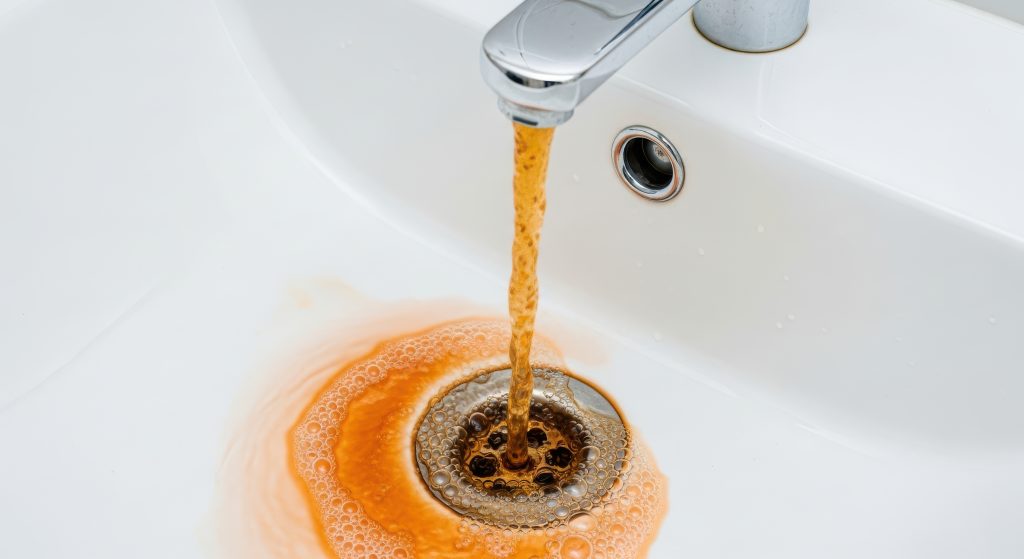
Brown or red water from the hot tap is an obvious sign of internal corrosion. Over time, the glass lining inside the steel tank can develop little cracks. Once water contacts exposed steel, rust forms and mixes into your supply.
What’s behind it
The anode rod is designed to take the corrosion hit so the tank walls don’t have to. It lasts about 3–5 years. After that, the tank is unprotected from rust. Hard water and skipped maintenance shorten that window.
How to check it
Fill a glass from the hot tap and another from the cold. Discoloration only in hot water confirms the heater is the source. Check multiple faucets—rust from several locations points back to the tank. If both hot and cold water run cloudy, the problem might be with the galvanized pipes, not the heater.
What You Can Do
A tank flush clears sediment-related discoloration ($100–$200). Replacing a worn anode rod early can extend tank life significantly ($200–$400 for parts and labor). Rust coming from the tank walls can’t be patched. Once internal corrosion takes hold, replacement is the only path forward—especially on units older than 8–10 years.
3. Strange Noises — Popping, Rumbling, or Banging
These sounds are usually the earliest warning the tank is in trouble. They’re also the most actionable—catch them early and a flush may be all it takes.
What’s behind it
Hard water carries calcium and magnesium that settle at the tank bottom over time. The heating element warms water trapped beneath that sediment layer; steam bubbles burst through and produce the popping or rumbling you hear. As the layer thickens, gentle pops turn into loud banging. Sediment forces the element to work harder, wastes energy, and can warp the tank or burn out components.
Banging when water shuts off is a different issue: water hammer, caused by water reversing sharply through the pipes. Check water pressure—anything above 80 PSI causes knocking and stresses joints over time.
How to check it
Listen during heating cycles. Popping during heat-up confirms sediment. Banging at shutoff points to water hammer. Attach a pressure gauge to the nearest faucet to check PSI.
What You Can Do
Flush the tank: turn off power or gas, let the water cool, connect a garden hose to the drain valve, and run it until the discharge runs clear. Flushing costs $100–$200 if you hire it out. If noise continues after flushing, or you smell gas on a gas unit, call a licensed technician. Persistent noise after flushing can mean the tank lining is damaged, which means replacement.
4. The Unit Is Past Its Expected Lifespan
The older your water heater gets, the more likely it is to fail. Many homeowners don’t think about replacing it until something goes wrong. Even if it’s not leaking or making unusual noises, an older unit can still fail without much notice.
Expected lifespans
- Gas tank water heaters: 8–12 years.
- Electric tank water heaters: 10–15 years.
- Tankless models: 15–20 years with regular maintenance.
Hard water shortens these timelines by up to 30%. Annual flushing and anode rod replacement every 3–5 years push back the curve.
How to find your unit’s age
Check the manufacturer’s label on the side of the tank. For example, Bradford White uses the first letter for year, second for month. If you can’t find the label, try decoding the serial number.
5. Repeated Repairs Within 12 Months
Multiple service calls in a year isn’t bad luck—it’s the unit breaking down. Wear and tear accounts for quite a bit part of all water heater failures. Units past the 10-year mark operate near the end of their useful life. Sediment, corrosion, and component wear accumulate inside the tank where you can’t see them. Fix one part, and the stress shifts to the next aging component.
How to assess it
Add up every service call from the past 12 months. Individual repairs run $150–$600. When the total hits 30–50% of a replacement unit’s cost, continuing to repair is just postponing the inevitable.
What replacement actually costs
A full swap runs $1,000–$2,500 including installation. Standard tank replacements take 3–6 hours under normal conditions. Newer units deliver better efficiency, lower monthly utility bills, and most carry 10-year warranties on key components—a meaningful upgrade from a unit that’s been patched repeatedly.
Quick Reference
| Warning sign | Main cause | DIY diagnosis | Replace or not |
| Visible Leaks | Tank corrosion; loose fittings; pressure >80 PSI | Dry-cloth test; inspect top, side, base with paper towels | Yes |
| Rusty Water | Depleted anode rod; corroded tank interior | Fill glass from hot tap; compare to cold water | Yes |
| Strange Noises | Sediment buildup; water hammer | Listen during heating cycles; check pressure with gauge | Only if tank lining is damaged |
| Age Beyond Lifespan | Normal wear; hard water accelerates by up to 30% | Check label or decode serial number by brand | Yes |
| Frequent Repairs | Cascade failures in aging unit; wear and tear | Add up all service calls in the past 12 months | Yes |
Bottom Line
Leaks, rust, unusual noises, age, and a growing repair bill are the five signals that your water heater is heading toward failure. Most of these give you time to act—a flush, an anode rod swap, or a straightforward part replacement can add years to the unit’s life if you move early.
Track your repair costs and check your water heater’s age today. A planned replacement on your schedule is a lot easier than an emergency call at 3 a.m.
Sources
Every external claim in this guide links to its origin. Collected automatically from the text above.
- $1,643–$1,907 — homewyse.com
- The U.S. Department of Energy — energy.gov
- 27 million — energystar.gov
- 69% — propertycasualty360.com
- $4,444 — osti.gov
- 3–5 years — westmorefuel.com
- gentle pops turn into loud banging — robinaireheating.com
- 8–12 years — rheem.com
- 10–15 years — pureplumbingpros.com.au

John Adams
John writes about home systems — HVAC, plumbing, electrical, and water heaters — for Decor Modern. His articles help homeowners understand the infrastructure behind their walls before something breaks and the repair bill arrives. John's background is in residential maintenance and facilities management. He spent six years overseeing day-to-day upkeep of multi-unit residential properties, handling everything from boiler failures to bathroom renovations. He was responsible for maintaining building systems across multiple residential units, including HVAC, plumbing, and electrical infrastructure. He learned the hard way that most homeowner emergencies start as small problems that nobody noticed in time — which is why his articles focus as much on diagnosis and prevention as on repair. His experience includes diagnosing system failures, coordinating repairs, and managing preventative maintenance to avoid costly emergencies. On Decor Modern, he's the author of the HVAC 101 and Plumbing 101 guides, the water heater warning signs article, and the bathroom renovation cost breakdowns. His approach: explain the system first, then the fix, then the cost. In that order. He focuses on helping homeowners recognize early warning signs before small issues turn into major repairs. John is based in North Carolina, where summer humidity gives him no shortage of material to write about.