

According to a 2026 survey of 1,000 homeowners, 1 in 3 respondents said their renovation cost more than expected. Read this article to uncover where money disappears in bathroom renovations, how to avoid making common mistakes, and when calling a pro might save your bathroom.
Why Budgets Break Down
Decisions Made Too Late
Budget overruns rarely come from one big mistake. More often, it’s a string of small decisions made too late. Each tweak feels minor—the final bill doesn’t.
Setting aside a contingency fund of 20% above your stated budget is a golden standard, and it exists for good reason. Older homes routinely reveal rotten subfloors, corroded pipes, or outdated wiring once walls open. These aren’t contractor excuses—they’re structural realities that no quote can anticipate.
Plumbing Moves Are Expensive
Moving a single fixture three feet or more costs $500–$1,000 per fixture; relocating multiple fixtures adds $3,000–$5,000 to a project budget. Toilets are usually the most expensive to move, especially on second floors where access to drain lines is limited.
Waterproofing Failures
Failed waterproofing is among the most costly mistakes in bathroom renovation, because the damage it causes is hidden. By the time peeling paint or a musty smell appears in an adjacent room, the structural damage behind the wall is often extensive. Remediation at that stage can add up to $15,000 to what should have been routine work, according to Brother and Brother Builders.
Skipping a Proper Space Plan
Bathrooms are among the most spatially constrained rooms in any home, and improvising layout decisions almost always creates problems. Industry guidance calls for at least 800mm (≈31.5″) of clearance in front of toilets and vanities, 1,000mm (≈39.37″) between opposing fixtures such as a vanity and shower door, and a minimum shower footprint of 900mm×900mm (≈35.43″×35.43″)—with 1,000mm × 1,000mm (≈39.37″×39.37″) considered the comfortable baseline.
Choosing Ventilation Based on Appearance
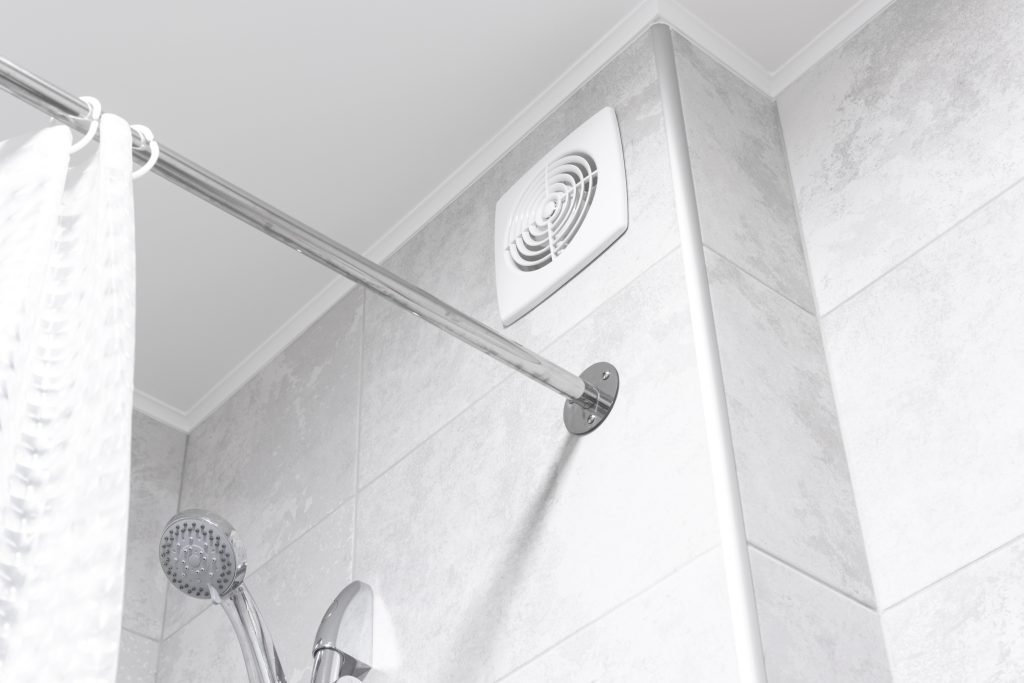
Exhaust fans are frequently treated as an afterthought. In practice, inadequate ventilation is a cause of long-term bathroom damage. The U.S. Department of Energy recommends a minimum fan capacity of 50 CFM for bathrooms, with sizing adjusted upward for larger spaces.
Prioritizing Trend Over Longevity
Design trends move faster than renovation budgets—hexagonal tile had its moment and is already feeling dated in many contexts. Matt black fixtures, currently ubiquitous, follow the same cycle. Design elements with strong personality also tend to polarize buyers—bold marble veining or highly patterned surfaces that look striking in a showroom can feel oppressive in daily use after a year.
Classic formats—subway tile in light neutrals, herringbone in natural stone tones—hold their visual relevance across renovation cycles and tend to perform better when a home goes on the market.
Using the Wrong Materials
Ceramic and porcelain tile remain reliable for bathroom walls and floors, but they require consistent grout maintenance to stay mold-free over time. Acrylic wall panels offer a waterproof, grout-free alternative with lower long-term maintenance, though they carry a different aesthetic profile. Neither choice is universally correct—what matters is matching the material to the maintenance reality of the household.
Fixing Bathroom Renovation Mistakes
What You Can Handle Yourself
Cosmetic corrections are often within DIY capability: replacing a single cracked tile, regrouting worn joints, recaulking a shower perimeter, or swapping out a tap or showerhead using existing supply lines.
The right equipment helps. Tile work requires a wet saw for clean cuts, appropriate trowels for the adhesive type, a grout float, and a laser level for consistent layout. Demolition benefits from a reciprocating saw and oscillating multi-tool. Eye protection and dust extraction are non-negotiable.
When to Call a Professional
- Leaks that return after repairs, inconsistent pressure, or knocking pipes.
- Structural damage to drain lines, vent stacks, or floor joists.
- Any plumbing or electrical work—legally restricted in most U.S. jurisdictions; unpermitted work can void insurance and flag at resale.
Professional Corrections Cost
Standard bathroom remodels run $5,000–$28,000 for spaces between 40 and 150 square feet. Spa-level renovations reach $30,000 and above. Fixing poorly executed prior work typically costs more than starting fresh, because contractors must first undo what was done incorrectly before implementing any solution.
Red Flags to Pay Attention To
Before signing any contract, ask for itemized quotes, verify licensing and insurance, request references from completed projects, and confirm that all required permits are included in the scope. Red flags worth walking away from:
- Pressure to decide immediately.
- Upfront deposits exceeding one-third of the total contract value.
- No physical business address.
- Not providing a written agreement.
Costs at a Glance
| Scope of work | Typical range |
| Standard bathroom remodel | $5,000–$28,000 |
| Spa-level remodel | $30,000+ |
| Moving plumbing fixtures (per fixture) | $500–$1,000 |
| Total plumbing relocation | $3,000–$5,000 |
| Waterproofing failure remediation | $3,000–$15,000 |
| Contingency fund | 20% of budget |
Conclusion
Bathroom renovations hate improvisation. Lock in every layout and material decision before demolition. Price plumbing moves honestly before committing to a design that requires them. Waterproof wet areas correctly, vent to the exterior.
Handle cosmetic fixes yourself; hand structural, plumbing, and electrical work to licensed professionals. And set aside that 20% contingency fund—not because something will definitely go wrong, but because something usually does.
Sources
Every external claim in this guide links to its origin. Collected automatically from the text above.
- According to a 2026 survey — thisoldhouse.com
- $500–$1,000 — angi.com
- up to $15,000 — thequoteyard.com.au
- Industry guidance — trendsproperty.com
- recommends — energy.gov
- $30,000+ — angi.com

Nina Kowalski
Nina covers flooring, renovation planning, and DIY repair guides for Decor Modern. Her focus is translating contractor-level knowledge into step-by-step instructions that a homeowner can actually follow on a Saturday morning. Before writing about home improvement, Nina spent four years managing renovation projects for residential properties in the Midwest — coordinating work between flooring installers, painters, and general contractors. She worked on projects ranging from single-room updates to full-home renovations, gaining firsthand experience in budgeting, timelines, and contractor coordination. That experience taught her which shortcuts work, which ones backfire, and how much things really cost when the estimate meets reality. She saw how initial estimates change once work begins — and which decisions tend to increase costs or cause delays. Her most-read articles on Decor Modern include a guide to fixing scratches on hardwood floors and a breakdown of the cost to refinish hardwood floors. She also writes the site's cost comparison pieces, where she digs into real pricing data rather than repeating vague national averages. Her writing is grounded in real project constraints — including labor availability, material costs, and unexpected issues that arise during renovation. Nina holds a degree in Communications and has contributed home improvement content to several online publications. She lives in Ohio, where she is currently refinishing the original oak floors in a 1948 Cape Cod — one room at a time.