
In this guide
You want a purple coneflower that practically grows itself while attracting butterflies and songbirds to your garden? You’re not alone—and the good news is that this native North American perennial delivers that with minimal fuss.
Hardy in USDA zones 3-9, the purple coneflower plant blooms from summer into fall with daisy-like flowers that pollinators love. Goldfinches feast on purple coneflower seeds as they ripen, and you get a front-row seat to nature’s activity. Whether you start with seeds or transplants, understanding proper purple coneflower care makes all the difference between a struggling plant and a thriving one.
This piece walks you through everything beginners need to know: selecting the right location and planting echinacea purpurea purple coneflower correctly. We’ll also cover how to maintain these coneflowers perennials throughout the season and troubleshoot common problems.
Understanding Purple Coneflower Plant Basics

Image Source: The Spruce
What is Purple Coneflower (Echinacea Purpurea)
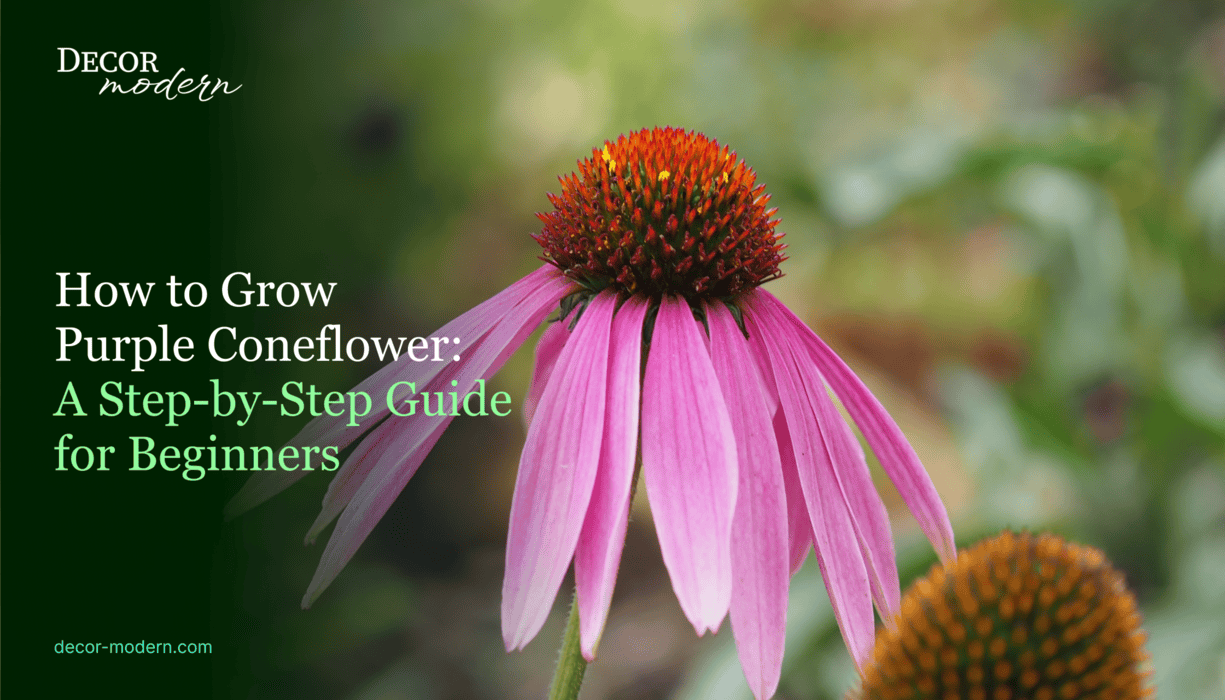
Purple coneflower is a herbaceous perennial in the daisy family (Asteraceae) native to central and eastern North America. The plant forms clumps of rough, lance-shaped green leaves that create a leafy base in spring. Strong upright stems rise from this base, and each stem is topped with distinctive daisy-like flowers measuring up to 5 inches in diameter. The blooms feature drooping purple-pink petals (called ray flowers) surrounding a raised, spiny cone in shades of copper and orange. The genus name Echinacea comes from the Greek word “echinos,” meaning hedgehog, a reference to the prickly center cone. Plants reach 2 to 5 feet tall and bloom from late spring through early fall.
Light and Sun Requirements
Purple coneflower grows best with 6 to 8 hours of direct sunlight daily. Full sun produces the strongest stems and heaviest bloom production. Light afternoon shade prevents flower fading while maintaining good flowering in very hot climates (zones 8 and higher). Planting in deep shade reduces flower production and increases disease risk. It also causes plants to become leggy with weak stems. Sunlight optimizes photosynthesis, so more sun translates to more growth and blooms. Choosing a location with adequate sun exposure makes the difference between sparse flowering and a strong display.
Soil Type and pH Needs
This plant adapts to many soil types, including loam and sandy soil, as long as drainage is good. Purple coneflower prefers average, well-drained soil and performs best in ground that is not overly rich. Very fertile, heavily amended soil encourages soft, floppy growth rather than sturdy stems. The optimal pH range sits between 6.0 and 7.5, with some sources specifying 6.5 to 7.2. Good drainage matters more than high fertility. Water standing around the roots for extended periods guides to problems, so avoid waterlogged sites.
Hardiness Zones and Climate Conditions
Purple coneflower is hardy in USDA zones 3 to 8, with some varieties extending to zone 9. The plant tolerates cold winters and hot summers when planted in suitable soil. Full sun and well-drained soil prevent disease and keep plants upright and healthy in humid climates. These perennials handle drought, heat and even poor soil conditions without complaint once they are established.
How to Plant Purple Coneflowers
1. Choose the Right Location
Spring planting after the last frost works best, though fall planting succeeds if done before the ground freezes. Scout your yard to find a spot receiving 6 to 8 hours of direct sunlight daily. Avoid areas with standing water or heavy clay that stays soggy after rain. Purple coneflower tolerates many soil conditions but fails in waterlogged ground.
2. Prepare the Soil
Loosen soil to a depth of 12 to 15 inches. Mix in 2 to 3 inches of compost or aged manure to improve drainage and add nutrients. Clay-heavy soil needs sand or fine gravel worked in to prevent water from pooling around roots. The prepared bed should feel loose and friable once you squeeze a handful.
3. Dig and Position the Plant
Dig a hole twice the diameter of the pot and a bit deeper than the root ball. Remove the plant from its container and gently tease apart any circling roots[101]. Position the plant so the crown sits level with or a bit above the surrounding soil surface. Too-deep planting causes stem rot and plant death. Backfill with the soil-compost mixture and press firmly to eliminate air pockets.
4. Water After Planting
Water deeply right after planting to settle soil around roots. Check moisture every other day during the first few weeks. Water once the top inch of soil feels dry to the touch. Drooping leaves signal thirsty plants. Newly planted purple coneflowers need consistent moisture until they establish.
5. Spacing Multiple Plants
Space plants 1 to 3 feet apart, based on the mature size listed for your variety. Proper spacing increases air circulation between plants and reduces disease risk. Maintain adequate distance in groupings to allow each plant to develop its full clump size without crowding neighbors.
Purple Coneflower Care Throughout the Season

Image Source: Dengarden
Watering Schedule for Young and Mature Plants
Water whenever the first inch of soil feels dry to the touch during the original growing season. This might be once every two days or once a month based on rainfall and heat. Check plants every other day after planting. Droopy or wilting leaves signal thirst.
You might not need to water again once a full growing season passes. But during hot summers, provide a good drink every 1-2 months. Water in the morning or evening during summer. Opt for early morning watering to prevent mold and fungus if you live in humid regions. Water only when air and soil temperatures stay above 40°F and when there’s no snow cover.
Fertilizing and Adding Compost
Fertilizer is not needed, especially in high-quality soil. Add compost during late winter or early spring if needed. A 2-to-3 inch layer of compost beneath plants freshens soil in autumn. You can also apply balanced slow-release fertilizer once in spring.
Deadheading Spent Flowers
Deadheading spent blooms can prolong flowering. Cut stems back to a leaf where you see a bud ready to swell. But leaving flowers in late summer provides seeds for birds.
Pruning and Cutting Back
Cut plants back to ground level in late winter before new growth begins. Young stalks can be cut 3 to 6 inches above ground after stems turn brown. Mature plants have developed root systems and can be left standing.
Winter Care and Protection
Apply 2-to-3 inches of mulch over soil to insulate roots. Create a 4-inch mulch layer in climates with extended freezing. Leave plants standing through winter to provide food for birds.
Common Problems and How to Fix Them

Image Source: Greg
Leaves Turning Yellow or Spotted
Yellow leaves signal root zone problems rather than disease. Wet crowns from poor drainage turn plants yellow fast. Check soil moisture at crown level first. Lower leaves fade as seasons progress, but widespread yellowing indicates soggy conditions or drought swings. Bacterial leaf spot presents differently—dark brown to black angular spots with yellow halos appear on leaves. These spots start on lower leaves and move upward through summer. Remove affected leaves and avoid overhead watering. Water early morning so foliage dries quickly.
Plant Not Blooming
Plants need at least four hours of direct sunlight, ideally in afternoon when sun is strongest. Poor drainage causes coneflowers to decline without flowering. High-nitrogen fertilizer boosts leaves over flowers—use balanced formulas like 10-10-10 instead. Deadheading encourages additional blooms through early fall. Recent transplanting or division redirects energy to foliage rather than flowers for a time.
Pest Issues (Aphids, Japanese Beetles)
Aphids appear as small soft-bodied insects that cause leaf curling, yellowing, and sticky honeydew deposits. Blast them off with strong water streams or apply insecticidal soap three times at five-to-seven-day intervals. Japanese beetles show metallic green bodies with copper wings and skeletonize leaves by eating tissue between veins. Handpick beetles early morning when less active and drop into soapy water.
Overwatering and Root Rot
Overwatering causes much more damage than underwatering. Symptoms include yellowing leaves, wilting despite adequate water, and brown mushy roots. Stems may blacken and rot at soil level. Improve drainage by working compost into heavy soil. Reduce watering frequency and ensure pots have drainage holes.
Conclusion
Choose a sunny spot with good drainage, plant at the right depth, and water regularly during the first season. These perennials take care of themselves afterward and attract butterflies and birds to your yard.
Purple coneflower care is simpler than most garden plants. Keep monitoring your plants during their first year and address problems early. You’ll enjoy years of colorful blooms with minimal effort.
Sources
Every external claim in this guide links to its origin. Collected automatically from the text above.
- The Spruce — thespruce.com
- native to central and eastern North America — gardenia.net
- 6 to 8 hours of direct sunlight — monrovia.com
- Space plants 1 to 3 feet apart — almanac.com
- Dengarden — dengarden.com
- first inch of soil feels dry — plantaddicts.com
- 2-to-3 inch layer of compost beneath plants — thespruce.com
- Greg — greg.app
- Wet crowns from poor drainage — gardenish.co
- Overwatering causes much more damage — picturethisai.com

Nina Kowalski
Nina covers flooring, renovation planning, and DIY repair guides for Decor Modern. Her focus is translating contractor-level knowledge into step-by-step instructions that a homeowner can actually follow on a Saturday morning. Before writing about home improvement, Nina spent four years managing renovation projects for residential properties in the Midwest — coordinating work between flooring installers, painters, and general contractors. She worked on projects ranging from single-room updates to full-home renovations, gaining firsthand experience in budgeting, timelines, and contractor coordination. That experience taught her which shortcuts work, which ones backfire, and how much things really cost when the estimate meets reality. She saw how initial estimates change once work begins — and which decisions tend to increase costs or cause delays. Her most-read articles on Decor Modern include a guide to fixing scratches on hardwood floors and a breakdown of the cost to refinish hardwood floors. She also writes the site's cost comparison pieces, where she digs into real pricing data rather than repeating vague national averages. Her writing is grounded in real project constraints — including labor availability, material costs, and unexpected issues that arise during renovation. Nina holds a degree in Communications and has contributed home improvement content to several online publications. She lives in Ohio, where she is currently refinishing the original oak floors in a 1948 Cape Cod — one room at a time.