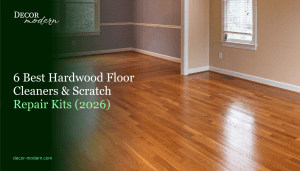
Scratches on your wood floors happen whatever care you take. Furniture moves, pets play and accidents occur. The good news? You can save serious money by learning how to fix scratches on wood floor yourself.
Professional sanding and refinishing can cost between $2,480 to $7,028 or more. Targeted hardwood floor scratch repair runs $478 to $1,624. Most surface scratches are DIY-friendly if you know what you’re doing, and even some deeper gouges can be handled.
This piece walks you through assessing scratch severity, choosing the right repair method and fixing hardwood floors step by step.
Understanding Wood Floor Scratches: Types and Assessment

Image Source: The Spruce
What Causes Scratches on Hardwood Floors
Wood flooring is durable, but accidents are inevitable with kids and pets around. What damages your floors matters because it helps you prevent future issues.
Most homes deal with these culprits:
- Furniture movement: Dragging chairs, tables, or sofas without protective pads leaves deep gouges. Dining chairs and barstools cause repeated damage in the same spots.
- Pet claws: Dogs and cats with untrimmed nails scratch softer woods more noticeably. Dog claws create deep scratches over 1/16-inch deep.
- Foot traffic: High heels, work boots, and cleats grind grit into your floors. Dirt and debris act like sandpaper on the surface.
- Dropped objects: Kitchen items like cast iron pans and food cans create dents when they hit the floor.
- Moving day: Heavy boxes, dragged appliances, and constant traffic from work boots scratch floors during moves.
- Toys: Rocking horses and ride-on vehicles grind along floors and create visible damage.
- Improper cleaning tools: Harsh or abrasive cleaning equipment damages the floor’s finish.
Hallways and kitchens sustain more damage than bedrooms.
Surface Scratches vs Deep Gouges
Surface scratches affect only the finish layer and are easy to fix. These measure less than 1/16-inch deep and appear as thin, shallow marks from sliding boxes or chairs. You can address them with touch-up products made for your flooring type.
Deep scratches and gouges penetrate beyond the finish into the wood itself. These need more work for hardwood floor scratch repair and include wood fillers or even board replacement. Deep scratches expose raw wood and make the floor vulnerable to moisture damage.
Dents result from heavy items being dropped or dragged across the floor, which compresses the wood’s fibers. A gouge is a flooring term used when actual hardwood has been removed.
How to Assess the Severity of Floor Damage
Run your hand over the damaged area. The damage affects only the finish if it feels smooth. Rough or raised areas indicate deeper issues.
Use your fingernail to gage depth. The scratch penetrates the finish into the wood if you can feel a groove. Scratches you can’t feel with your nail are finish-only damage.
Count the scratches and look for patterns. Isolated marks are easier to repair than clustered damage across entire rooms. Concentrated scuffs in hallways, below chairs, or by doors show high-wear areas that worsen faster.
Site-finished hardwood flooring is easier to repair than prefinished floors. Site-finished flooring gets installed unfinished and later finished in place. This makes its protective coating easy to sand. Prefinished wood flooring has multiple urethane and aluminum oxide layers that form a tough skin, which can defeat sanding and blending efforts.
White Scratches and Finish Damage
White scratches stand out on dark stained floors. Many prefinished floors use a urethane finish containing aluminum oxide. This makes the finish durable and long-lasting, but scratches appear white.
The aluminum oxide coating sits too close to the surface. Every little scratch shows up white on this ceramic-like product. These white etched marks can’t be buffed out or polished. You can wipe matching stain over the scratch to take away the noticeable white color, though this won’t remove the scratch itself.
Water-based polyurethane finishes scuff easier than solvent-based finishes, though they’re tough and don’t wear off quickly. Darker wood shows scratches and imperfections more readily than lighter wood. Oil finishes allow scratches to blend back in over time or be touched up easily. Polyurethane finishes show scratches worse because of their film coating.
Tools and Materials You’ll Need for Wood Floor Scratch Repair
Having the right materials makes the difference between a continuous repair and a visible patch job. Your supply list depends on the scratch depth and the type of finish on your floors.
Cleaning Supplies
Start every repair with a clean surface. Prepare the area with wood soap like Murphy Original Wood Cleaner. A microfiber mop paired with a quality wood floor cleaner removes dirt and can conceal minor surface scratches. You’ll need soft, lint-free cloths for wiping and buffing. A vacuum with a brush attachment helps clear debris from deeper scratches before filling.
Repair Materials for Surface Scratches
Light scratches that don’t penetrate the wood have several solutions that work. Floor markers and stains are among the easiest options for hardwood floor scratch repair. Touch-up markers hide scratches, chips and worn edges with color-fast results that last. These come in buildable shades that start light and darken with additional strokes.
Raw walnut offers an alternative for lighter woods. Rub it into scratches to fill and darken the damaged area. Equal parts lemon juice and vegetable oil, or vinegar and olive oil, can mask scratches. Olive oil or mineral oil applied with a soft cloth works the same way.
Wax repair sticks fill and color surface scratches in one step. The Weiman Wood Furniture Repair Kit has four touch-up markers, four filler sticks and a sharpener in light brown, medium brown, dark brown and black. Colored wax sticks are simpler to match than wood filler but aren’t as durable. Rub the wax perpendicular across the scratch until filled, then buff away excess.
Floor finish restorer and polish products bring back shine on glossy floors. Steel wool in #0000 grade, the finest you can get, smooths minor imperfections before applying finish.
Products for Deep Scratch and Gouge Repair
Scratches that expose raw wood need wood filler. Small nicks, holes or gouges require wood filler products that can be stained to match your flooring. Choose putty or filler color-matched to your floor, then apply with a plastic putty knife. Sand with 120-220 grit sandpaper once dry.
Complete repair kits simplify the process. The CalFlor FloorFix Kit contains five pigments with 27 color formulas for custom matching. The Knottec professional wood repair glue gun kit fixes knots, holes, cracks and deep scratches in two minutes. The Mohawk touch-up repair kit works like a pen with 25 color options for shallow scratches and small marks.
Epoxy-based fillers handle the deepest damage but require longer curing times and are sort of hard to sand. Mix clear epoxy with sawdust from your wood for color matching that’s almost exact.
Optional Tools for Professional-Level Results
Mirage repair kits have Fil-Stik wax pens for minor damage, touch-up markers for light scratches and polyurethane finish to restore topcoats, all priced at $44.99. A lambswool applicator or natural bristle brush applies finish smooth. Fine artist brushes paint stain into narrow scratches with precision. Painter’s tape protects surrounding areas during targeted repairs.
How to Fix Scratches on Wood Floor: Step-by-Step Process
Repairing scratches on hardwood floors follows a systematic approach that matches the repair method to the damage severity. Each technique requires patience and attention to detail for results that blend naturally.
Step 1: Clean the Scratched Area
Remove debris with a soft-bristled broom and dustpan before starting. Use a commercial cleaning product suitable for hardwood floors and avoid anything with waxes, pastes or polishes. Especially dirty areas need an oxygenated floor cleaner that bubbles grime away from the surface. A microfiber cloth works well for final cleaning. Pay close attention to the scratch itself, which should be completely free of dirt.
Step 2: Fix Surface Scratches with Buffing and Polish
The faintest scratches might need only buffing with a soft microfiber cloth. The buffing motion helps redistribute the floor finish and can camouflage the scratch. Apply wood floor polish to glossy floors to bring back shine. Steel wool in #0000 grade smooths minor imperfections, but use it only on oil-based or older finishes with very light pressure. Always work in the direction of the wood grain.
Step 3: Remove Scratches from Wood Floors Using Oil or Markers
Choose a floor color marker or stain pen like your floor color. Test the colorant in a non-visible area first to determine the closest color. Mix floor colorants if you need to achieve the perfect hue. Apply the marker to the scratch following the wood grain and use light controlled strokes. Less is more in this case since adding more stain is easier than removing excess. Wipe off any excess with a clean cloth before it dries. Natural wood tones respond well to rubbing a walnut along the scratch and letting the oils sit for a few minutes.
Step 4: Repair Deep Scratches with Wood Filler
Press wood filler into the scratch with a plastic putty knife and stay within the damaged area. Plastic putty knives are softer than metal and shouldn’t damage your floors. Smooth down the wet filler and wipe off excess right away. Let the filler dry for at least two hours. Sand it down by hand after drying and avoid the flooring around the scratch repair.
Step 5: Apply Stain and Finish to Match Your Floor
Tint the cured filler with wood stain or a stain pen to match your flooring’s color. Use a fine artist’s brush to paint stain inside scratches. Apply a thin coat of finish that matches your existing floor after the stain dries.
Step 6: Buff and Blend the Repaired Area
Rub fine-grade steel wool over the scratches when the colorant is dry. Clean the area using a tack cloth to remove microscopic debris. Buff with a clean microfiber cloth to blend the repair with surrounding areas.
Common Mistakes and Risks When Fixing Hardwood Floors

Image Source: Weles Wood Floor Services
Even minor errors during hardwood floor scratch repair can create bigger problems than the original damage. What goes wrong helps you avoid rework that can get pricey.
Using Wrong Cleaning Products on Wood Floors
Ammonia and bleach damage the surface and dissolve lignin in the wood. Glass cleaners created with ammonia leave spots and damage floors. Vinegar and lemon juice, while natural, are acidic and dull floors over time. Excessive water causes warping and swelling, especially when you have it seeping into cracks.
Oil soap traps dust and dirt on top of the varnish and fades your hardwood flooring over time. Wax products leave residue that causes floors to look cloudy and makes future refinishing difficult because stain won’t adhere well. Steam mops strip finishes and damage wood.
Generic wood fillers, household cleaners, or incorrect adhesives discolor floors, damage wood, or fail to hold repairs. Use products created for hardwood flooring repairs and read labels with care.
Applying Too Much Filler or Stain
Excess filler creates blotchy spots that become more visible after you apply finish. Wood filler is for nail holes and minor imperfections, not large defects. The filler will not stain to look like wood.
You leave sticky areas where polyurethane will peel off two months later when you don’t wipe off enough stain. Press filler within the damaged area and wipe excess while wet.
Skipping the Test Area
Always test in an inconspicuous area before recoating. Pick somewhere that would have had cleaning products applied, not closets or under area rugs. Contamination from granite countertop cleaners, stainless steel cleaners, or glass cleaners causes finish failure.
Not Matching Your Floor Finish Type
Not all finishes are compatible, even from the same manufacturer. Many finishes have a hot-coat window for chemical adhesion. You miss that window and mechanical abrasion becomes necessary. Peeling in big sheets happens when you use incompatible finishes.
Cost, Time, and When to Call a Professional

Image Source: Flooring Store
How Much Does Hardwood Floor Scratch Repair Cost
Professional repairs cost $3 to $8 per square foot for surface scratches, while deep gouges range $25 to $75 each plus $50 to $150 hourly labor. Minor touch-ups run $50 to $200 with professionals. So, full sanding and refinishing costs $3 to $8 per square foot.
DIY materials cost $20 to $50 for simple repairs, or $20 to $100 depending on scope. Repairs cost $478 to $1,624 versus $2,480 to $7,028 for floor replacement.
Time Required for DIY Wood Floor Repair
Simple scratch repairs take a few hours. Larger refinishing projects require several days for drying and curing. Professional refinishing takes 3 to 5 days for 800 square feet, or 3 to 6 days average. Wait 24 hours before walking on floors after refinishing, 48 hours for oil-based polyurethane furniture placement, and 72 hours for water-based.
Skill Level Needed for Different Scratch Types
Surface scratches require minimal experience. Deep gouges and refinishing demand specialized skills. Improper sanding creates depressions that you cannot remove. Refinishing requires understanding wood species, finish types, and equipment operation.
Signs You Need Professional Hardwood Floor Repair
Call professionals for very deep gouges, warping, cupping, rot, or water damage. Extensive water damage causes structural issues that experts must assess. Large cracks, worn-out finishes, loose boards, and squeaking indicate you need professional help.
Benefits of Professional Floor Restoration vs DIY
Professional repairs last 15 to 20 years versus 3 to 5 years for DIY. Professionals deliver superior quality and complete work faster while avoiding mistakes that get pricey. They provide warranty coverage and insurance protection.
Conclusion
You now have everything you need to tackle most hardwood floor scratches yourself. Surface scratches and shallow gouges are DIY-friendly when you use the right products and test in hidden areas first. You’ll save $400 to $1,500 compared to professional repairs.
Deep gouges penetrating the wood, widespread damage across multiple rooms, or finish compatibility problems signal it’s time to call professionals. Most homeowners handle minor repairs in a few hours with $20 to $50 in supplies.
The key is matching your floor’s finish type and working patiently. Avoid excess filler or incompatible products. Start small, test your approach, and your floors will look substantially better without the professional price tag.
FAQs
Q1. Can you really fix hardwood floor scratches with a walnut? Yes, rubbing the inside of a walnut (not the shell) into scratches is surprisingly effective. The natural oils in walnuts help fill and darken scratched areas, making them less noticeable. While this won’t completely eliminate surface and color inconsistencies, it significantly reduces the eyesore without requiring expensive products or professional help.
Q2. What’s the difference between surface scratches and deep gouges on wood floors? Surface scratches only affect the finish layer and measure less than 1/16-inch deep. You can typically fix these with buffing, polish, or touch-up markers. Deep scratches and gouges penetrate through the finish into the actual wood, requiring wood filler, staining, and refinishing. If you can feel a groove with your fingernail, it’s likely a deep scratch that needs more extensive repair.
Q3. How much does it cost to repair scratched hardwood floors? DIY repairs typically cost $20 to $100 in materials, while professional repairs range from $3 to $8 per square foot for surface scratches. Deep gouges cost $25 to $75 each plus labor. Complete floor refinishing runs $2,480 to $7,028, making targeted DIY repairs a cost-effective option for minor damage.
Q4. Should I use vinegar and olive oil to fix wood floor scratches? While some people use olive oil or a vinegar-olive oil mixture as a quick fix to darken and disguise scratches, this isn’t recommended as a long-term solution. Vinegar is highly acidic and can dull floors over time, while olive oil may go rancid. Better alternatives include walnut oil, wood markers, or products specifically designed for hardwood floor repair.
Q5. How long does it take to repair scratches on hardwood floors yourself? Simple scratch repairs typically take just a few hours from start to finish. This includes cleaning the area, applying your chosen repair method (such as walnut, markers, or filler), and allowing time for drying. Larger refinishing projects require several days for proper drying and curing, with most floors needing 24 to 72 hours before you can walk on them or replace furniture.