

A worn-looking hardwood floor isn’t always a candidate for full refinishing. Often a buff and fresh polish does the job for a fraction of the cost. Professional sanding costs about $1–$3 per square foot. A full refinish typically costs $5–$8 per square foot (labor and finish included). Polishing it yourself with a rented buffer costs $21–$50 per day.
Polish, Buff, or Refinish
| Method | Best for | Equipment | Typical cost | How often |
| Buffing | Oiled or hardwax finishes; light wear | Low-speed buffer, soft pad | approx. $42–200/day rental | Every 2–4 months |
| Polishing | Polyurethane or lacquered floors | High-speed machine or applicator pad | approx. $21–$50/day rental | Every 2–4 months |
| Waxing | Penetrating (unfinished/oiled) wood | Wax-based cleaner, mop | Wax product cost | As needed, varies by traffic |
| Full refinish | Worn-through finish, deep gouges, warping | Drum sander, pro crew | approx. $5–$8 per sq ft | Every several decades |
Quick Finish Test
Scrape a hidden patch with a sharp blade. A clear film means you have a surface finish—polishing is fine. If the wood just smudges, you have a penetrating finish and should use wax. Simple version: press a finger hard against the floor. A faint mark means the finish is soft (wax/oil) — buff it. No mark means a hard surface finish (poly/lacquer) — polishing is safe.
What You’ll Need
- A floor buffer.
- Microfiber applicator pad or mop.
- A vacuum with a soft-bristle attachment.
- Wood filler.
- The right polish for your floor’s finish (water-based urethane polish for polyurethane-coated floors and a wax-based product for wax-finished wood).
- Basic safety gear (gloves and glasses plus good ventilation).
Step-by-Step Guide
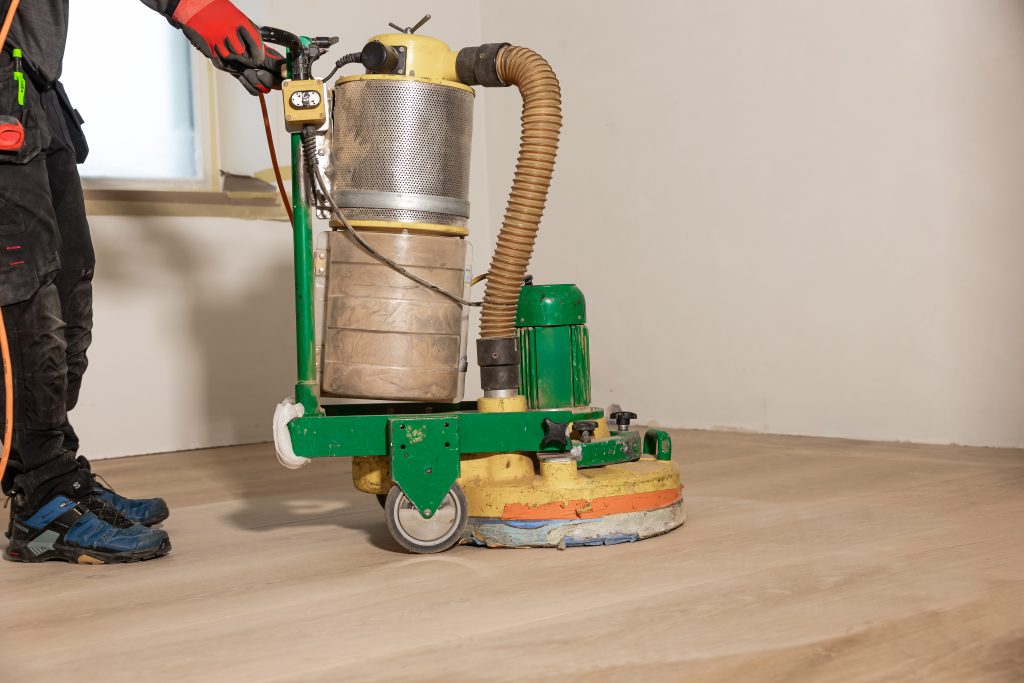
Clear the Room
Remove furniture from the room. Take rugs out and store them until the finish has fully cured.
Clean the Room
Vacuum the floor thoroughly, then mop it with a hardwood-safe cleaner, working with the grain. Allow the surface to dry completely before continuing.
Fix Small Damage
Fill small dents with wood filler and secure any loose boards. If you notice wide gaps, eliminate the underlying moisture issue first.
Measure and Buy Polish
Measure the room’s square footage, then compare it to the product’s coverage rate, and buy about 10% extra.
Work in Sections
Apply one section at a time (about 5 sq ft)—start at the far end of the room and move toward the exit. Roll the bottle before use (don’t shake it), then apply the polish with light strokes along the grain, slightly overlapping each pass.
Respect Dry Time
Floor polishes are usually ready for light foot traffic after an hour. However, to make sure you get a great result, wait 24 hours before resuming normal use.
Keeping It Looking Good
- Dust-mop and vacuum regularly.
- Don’t use ammonia or bleach. These can damage the finish.
- Polish every 2–4 months with normal foot traffic. High-traffic areas may need attention more often. If you notice deep scratches, cupping, or soft spots in the wood, it’s time to call a professional.
Sources
Every external claim in this guide links to its origin. Collected automatically from the text above.
- $1–$3 — thisoldhouse.com
- $21–$50 — westlinkservices.com.au
- $42–200 — bobvila.com
- Every 2–4 months — dgfloors.com
- Every 2–4 months — quickshinefloors.com
- polishing is fine — hardwoodinfo.com

Jane McKenna
Jane covers interior design, room-by-room planning, and the organizational side of home improvement for Decor Modern. Her articles help homeowners decide how a space should look and function before they start buying materials. Jane's path to home improvement writing started in set design for small theater productions in New England — a job that taught her how to make any room feel intentional on almost no budget. She transitioned into residential interior consulting, working with homeowners on kitchen layouts, bedroom makeovers, and practical space planning that doesn't require an architect. After five years of in-person consultations, she began writing to reach people who couldn't afford a designer but still wanted thoughtful guidance. Over the course of her consulting work, she has worked with dozens of homeowners on kitchen layouts, bedroom redesigns, and space planning decisions — often within tight budgets and existing structural constraints. On Decor Modern, she writes the interior design styles guide, the bedroom and living room articles, and the kitchen remodel planning series. Her approach is pragmatic: she cares more about whether your kitchen layout actually works for cooking than whether it follows a trend. Her work focuses on functional design — layouts that improve how a space is actually used day-to-day, not just how it looks in photos. Jane is based in Connecticut, in a 1920s colonial that she and her husband have been updating room by room since they bought it — "slowly, and with a lot of opinions from each other."