Most homeowners get stuck at the time they choose between different types of interior design styles. You can scroll through inspiration photos with ease, but translating those ideas into a cohesive look for your actual space is a different challenge. This becomes harder if you’re not sure which design styles match your lifestyle and budget.
This piece breaks down popular interior design styles in practical terms. Readers will learn how to identify their perfect home decor styles and what each look costs to implement. You’ll understand realistic timelines for different projects and figure out the right time to DIY versus hiring a professional. We aim to help you finish with a clear action plan that fits your space and budget.
Why Understanding Interior Design Styles Matters for Your Home
Image Source: Home Stratosphere
The Right Time to Think About Your Home’s Design Style
Most homeowners wait until they’re ready to redecorate before thinking over their design style. This approach costs money and creates frustration. The right time to think about your home’s design style is before you buy furniture, choose paint colors, or start any renovation project.
Start by looking at your home’s architecture and built-in features. Your design style should complement these elements, not fight them. A Victorian home with detailed moldings needs a different approach than a modern box-shaped apartment. Your home’s bones matter, and ignoring them results in a disconnected look where nothing quite fits together.
Evaluating your lifestyle needs before settling on any design direction is just as important. Gather images of rooms you love and identify common patterns in them. Match these priorities to actual interior design style names. This process saves you from buying pieces that don’t work together or fit your actual living requirements.
How Design Styles Affect Your Daily Living Experience
Interior design affects how you feel at home. The right design style makes you relaxed and happy. The wrong style makes you uncomfortable, even when everything looks nice.
Daily tasks become easier when you choose a design style that fits your life. Your kitchen works better for cooking. Your bedroom helps you sleep. Your living room welcomes guests naturally. Good interior design supports your routines rather than working against them.
The style you choose affects your daily comfort in specific ways. Some styles create calm spaces. Others bring energy and excitement. You need to match style to function based on how you use each room. A busy family needs durable design choices. Washable fabrics and sturdy furniture work best in homes with children. A couple without kids might choose more delicate materials. Their design style can include lighter colors and finer finishes.
Pet owners need specific design features too. Scratch-resistant materials matter when you have cats. Easy-to-clean surfaces save time with dogs. Your design style can work around pet needs without compromising beauty.
The American Society of Interior Designers states that successful interior design always serves the homeowner’s lifestyle first. This is where homeowners make mistakes often. They choose a style that looks perfect in photos but doesn’t work for their routines. The result creates stress instead of comfort.
What Determines the Right Style for You
The right interior design style protects your budget. You stop buying things that don’t fit. Every purchase works with your plan. You save money by choosing once and choosing well.
A clear design style adds value to your home. Buyers see a well-planned space. They imagine living there easily. Homes with consistent interior design sell faster. Your style lasts longer when you choose thoughtfully. Trendy decor goes out of style quickly. Classic design styles stay beautiful for years. You won’t need to redecorate as often.
The style choice comes down to personal taste combined with practical constraints in most homes. Color schemes, textures, and layout choices all stem from your individual priorities. Your unique taste shapes the atmosphere of every room.
Think about how you use each room before committing to a style. Your bedroom design should help you relax. Kitchen design should make cooking easy. Living room design should welcome conversation or quiet time. Each space needs the right approach for its function. Your design style needs to be practical if you have young children. Avoid styles with delicate materials that won’t survive daily family life.
What You Need to Know Before Choosing an Interior Design Style
Image Source: Nexa Homes
“The essence of interior design will always be about people and how they live. It is about the realities of what makes for an attractive, civilized, meaningful environment, not about fashion or what’s in or what’s out. This is not an easy job.” β Albert Hadley, Renowned interior designer known for elegant, timeless American interiors
Budget decisions shape every aspect of your interior design style choice. Without clear numbers, you risk falling in love with pieces you can’t afford or feeling discouraged when costs don’t meet expectations.
Your Budget and How It Affects Style Choices
Create a realistic budget before looking at any furniture or design inspiration. General cost ranges for styling projects include USD 15,000 to USD 30,000 for living room furniture, rugs, lighting, and art. Kitchen renovations run USD 50,000 to USD 80,000 and above. Bathroom redesigns cost USD 30,000 to USD 50,000. Full home fit-outs start at USD 100,000 and increase based on space size and material choices.
Separate your budget into needs versus wants. Needs include what each room requires to function, such as lighting and simple furniture. Wants extend to what makes your spaces feel finished, including decorative accessories and wall treatments. This difference proves necessary should you deplete your budget. Add a cushion of 10 to 20 percent to your set budget for unexpected costs.
Some design styles cost more than others. Traditional style requires more money because of detailed furnishings and custom elements. Modern and Scandinavian styles can be more affordable with their focus on simplicity and fewer decorative pieces.
Space Size and Architecture Limitations
Small spaces require different approaches than large rooms. Homeowners make a mistake here: using too many small furniture pieces in compact areas. A few moderately sized furniture pieces combined with an efficient floor plan make the space feel bigger while creating less clutter and more functionality.
Multi-functional furniture optimizes smaller areas. Ottomans with hidden storage, fold-out desks, and sofas with pull-out beds allow spaces to adapt throughout the day. This versatility helps maintain room functionality whether hosting a large gathering or creating a quiet space for relaxation.
Vertical storage solutions maximize limited floor space. Tall bookshelves, cabinets, or wall-mounted storage use vertical space well. Choose furniture with visible legs rather than heavy pieces sitting on the floor. Pieces with raised legs open up the room and make it feel lighter and more spacious.
Your Lifestyle and Functional Requirements
Ask yourself how each space will be used. What activities take place in this room? Do other people use the space, including children and pets? These questions drive functional design decisions.
Work-from-home professionals need dedicated workspace with natural lighting and minimal distractions. Frequent entertainers benefit from open kitchen layouts connected to dining spaces and stain-resistant fabrics on furniture. Families with young children require washable fabrics, durable finishes, and storage solutions that work.
Ergonomic furniture and layouts make daily activities more comfortable. Think over your future plans for the space to make it adaptable and long-lasting.
Existing Furniture and What to Keep or Replace
Review current furniture before buying new pieces. Some furniture just needs updating. Reupholstering a sofa, refinishing a dining table, or modernizing a vintage dresser preserves sentimental value while updating style.
Move pieces to different rooms to see them in a new light. An old dining table might work as a spacious desk in a home office. Repurposing items from one room to another creates an instantaneous update without additional costs.
Paint wooden furniture pieces that have good lines but dated finishes. Find inspiration from furniture manufacturers you love to dictate paint color choices. Keep the things you love and find ways to make them work in your new design direction.
Most Popular Interior Design Styles Explained
Image Source: Canadian Log Homes Blog
Understanding the different types of interior design styles helps you name what you’re drawn to and communicate with contractors or designers clearly. Each interior design style has specific characteristics that set it apart.
Modern Interior Design Style
Modern design emerged in the early to mid-twentieth century and refers to a specific historical period. Clean lines, minimal ornamentation and a monochromatic color palette define this style. Natural materials like unpainted wood, metal, leather and concrete appear throughout modern spaces. The philosophy centers on form following function. Every element serves a purpose. Floor-to-ceiling windows, open living spaces and flat roofs became dominant during this era.
Contemporary Interior Design Style
Contemporary design means “of the moment” and evolves with current trends constantly. This style is different from modern because it adapts to present-day esthetics rather than referencing a specific time period. Clean lines mix with curved edges, and neutral palettes get punctuated with bold accents. Contemporary spaces feature sculptural lighting, updated materials and open floor plans. The style borrows from multiple esthetics including minimalism and Scandinavian influences.
Traditional Interior Design Style
Traditional interior design draws inspiration from 18th and 19th century European decor. Rich wood tones in mahogany, maple and cherry dominate furniture choices. Ornate details, button-tufted pieces, carved wood and metallic accents create elegance. Symmetry guides room arrangements. Furniture and accessories often appear in pairs. Color schemes include neutral walls with bold accent colors like deep reds, greens and warm jewel tones.
Transitional Interior Design Style
Transitional design blends traditional elegance with modern simplicity. Neutral color palettes feature whites, creams, tans and grays with occasional color pops. Furniture combines straight lines with curved elements, like pairing a linear sofa with a circular ottoman. Texture plays a key role through layered fabrics and tone-on-tone neutrals. This style allows growth and change without committing to one singular esthetic.
Scandinavian Interior Design Style
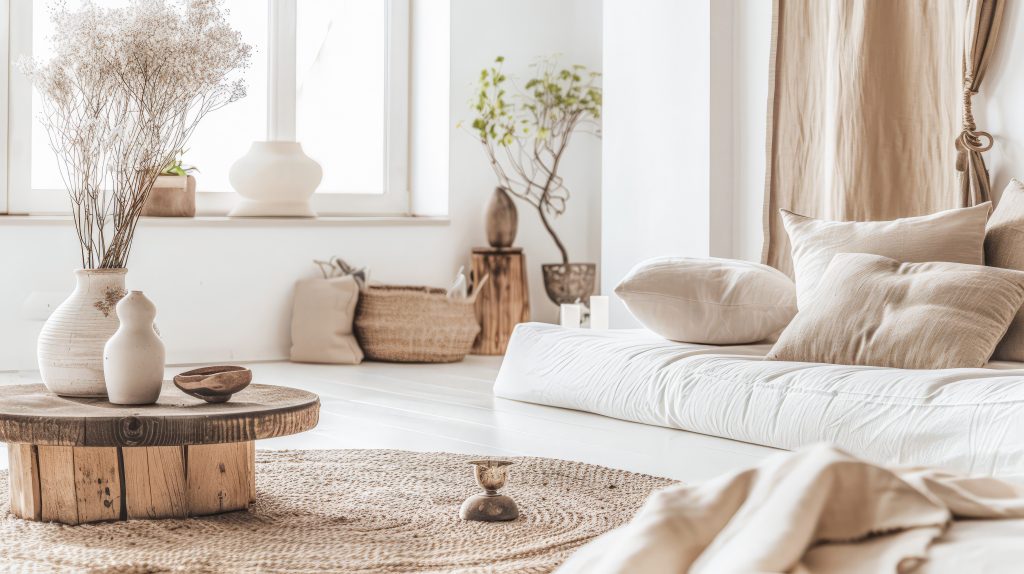
Scandinavian design emphasizes minimalism, functionality and natural materials. Light neutral palettes create calm settings. Wood textures and cozy textiles complement them. The concept of hygge creates environments that encourage contentment and comfort. Large windows without curtains maximize natural light during short winter days. Clean lines and simple forms avoid unnecessary ornamentation, with only purposeful items incorporated.
Industrial Interior Design Style
Industrial style takes inspiration from factories and warehouses. Exposed brick walls, visible pipes, open ductwork and steel beams define the esthetic. Neutral color palettes emphasize darker tones like blacks, grays and whites. Raw materials including rough wood, concrete floors and weathered leather create a relaxed personality. High ceilings and large windows provide natural light.
Bohemian Interior Design Style
Bohemian design follows one rule: there are no rules. Furniture, art and finishes don’t need to match. They express individual personality instead. Bold patterns, vibrant colors and jewel tones like violet, emerald and ruby appear against neutral backdrops. Natural materials including wicker, rattan and wood bring warmth. Vintage furniture, travel souvenirs and family heirlooms create personal narratives.
Minimalist Interior Design Style
Minimalist design focuses on living with what you need rather than as little as possible. Clean lines, limited ornamentation and neutral color schemes characterize spaces. Every element serves a purpose. Clutter-free rooms and thoughtful storage solutions define the approach. Natural materials add warmth without excess decoration. The style promotes mindful consumption and purposeful living.
Coastal Interior Design Style
Coastal design captures the tranquility of beach living through soft tones and natural textures. Color palettes draw from rocky beaches, including blues, whites, creams, greens and grays. Natural materials like wood, linen, jute and rattan appear throughout. Large windows frame landscapes and maximize natural light. Clean lines and slip-covered furniture create relaxed, comfortable spaces.
Farmhouse Interior Design Style
Farmhouse style infuses warmth, simplicity and rustic charm into homes. Modern farmhouse blends rustic appeal with contemporary elements. Neutral colors like whites, creams and beiges dominate. Reclaimed wood, shiplap and distressed finishes add character. Large pedestal tables, Windsor chairs and linen upholstery suit the esthetic. Architectural features include wood ceiling beams and barn doors.
How to Identify Your Perfect Interior Design Style: Step-by-Step Process
Image Source: Greenhouse Studio
Your perfect interior design style needs a systematic approach to find. This five-step process moves you from browsing inspiration to implementing a cohesive look.
Step 1: Gather Inspiration from Multiple Sources
Designers gather ideas from Instagram more than anywhere else. Pinterest allows you to create boards and organize favorite interior design concepts with ease. Design websites like Houzz provide 12,855,862 pictures from professional designers.
Digital platforms aren’t the only place to look. Travel memories influence design choices substantially. Nature provides color palettes from sunrise tones to bush walk textures. Visit retail stores, cafes and high-end hotels to see how spaces are designed. Fashion runways reveal upcoming colors and shapes.
Step 2: Analyze Your Current Space and Priorities
Personality shapes interior design priorities substantially. Participants in design studies express aspects of their identity through living spaces. Research shows people prefer curved over angular shapes, though individual differences in expertise and sex modulate this preference.
Ask yourself questions about favorite colors, textures and patterns. Explore your existing decor to understand what appeals to you consistently. Identify patterns in what catches your eye rather than copying someone else’s style.
Step 3: Create a Mood Board with Your Favorite Elements
Fabric swatches, paint chips and magazine cutouts are good places to begin. Mood boards organize inspirational references and create visuals for the finished look. Digital platforms like Pinterest and Canva make quick work of collecting ideas.
Physical mood boards with dimension, fabrics and colors convey stronger feelings than digital versions. All space elements from furniture to window treatments and flooring should be included. Take time to review your completed board and make adjustments if something doesn’t feel right.
Step 4: Test Your Style with Small Changes
Test your design direction before buying expensive pieces. Keep a copy of your mood board on your phone to reference while shopping. Compare new finds to your color palette before purchasing.
Paint samples or small accessories in your chosen style are good starting points. Move existing furniture to different rooms to see pieces in new contexts. This step reveals whether your planned style works in your actual space.
Step 5: Commit to Larger Purchases and Renovations
Make larger furniture purchases and renovation decisions after that. Your mood board guides these investments and prevents mistakes that get pricey. Share your board with contractors to communicate your vision with clarity.
Work together to ensure chosen styles fit your unique needs and budget. Your role involves achieving your desired esthetic while addressing functional requirements.
Common Mistakes When Choosing Interior Design Styles
Image Source: Homes and Gardens
“Be faithful to your own taste, because nothing you really like is ever out of style.” β Billy Baldwin, Influential mid-20th century interior designer, ‘Decorator of the Year’ multiple times
Mistakes in selecting interior design styles waste money and time. Here are four traps that catch homeowners repeatedly.
Trends Without Longevity
Designer Christopher Stevens warns that trends looking amazing now will appear tired in five years. Homeowners often make a mistake here: they chase what’s popular on social media instead of choosing pieces they love.
Trends cycle in and out every few years. Design elements you wouldn’t have thought over two years ago signal a trend rather than timeless design. Interior designer Nate Berkus notes people look over their shoulders and listen to what everyone else talks about instead of asking what they love.
Start with classic, high-quality materials for permanent elements like flooring and cabinetry. Add trendy accents through accessories, paint colors and lighting that update with ease. This approach keeps homes feeling current without constant redesigns.
Too Many Styles Without a Cohesive Plan
Different styles of interior design work when done thoughtfully around scale, esthetic and balance. Choose a dominant style and use elements of others in supporting roles. Keep color palettes and scale consistent to make mixed styles feel cohesive.
Thoughtless planning creates erratic spaces. Each room needs personality, but not at the expense of coherence. Think of your home as an ensemble, not a solo performance.
Your Home’s Architectural Features
Unified architectural elements like trim, baseboards and flooring act as the canvas for your design. Establish the lead style, then introduce accents that work with these features.
The Cost of Full Style Implementation
Homeowners lowball renovation budgets. Budget for unsexy parts like replacing plumbing, installing insulation and fixing stormwater drains that get missed. Add 20 percent to your estimated project total for unexpected events.
Cost and Time Estimates for Different Design Styles
Different interior design styles carry distinct price tags and timelines. What matters when planning your project:
Budget-Friendly Interior Design Styles
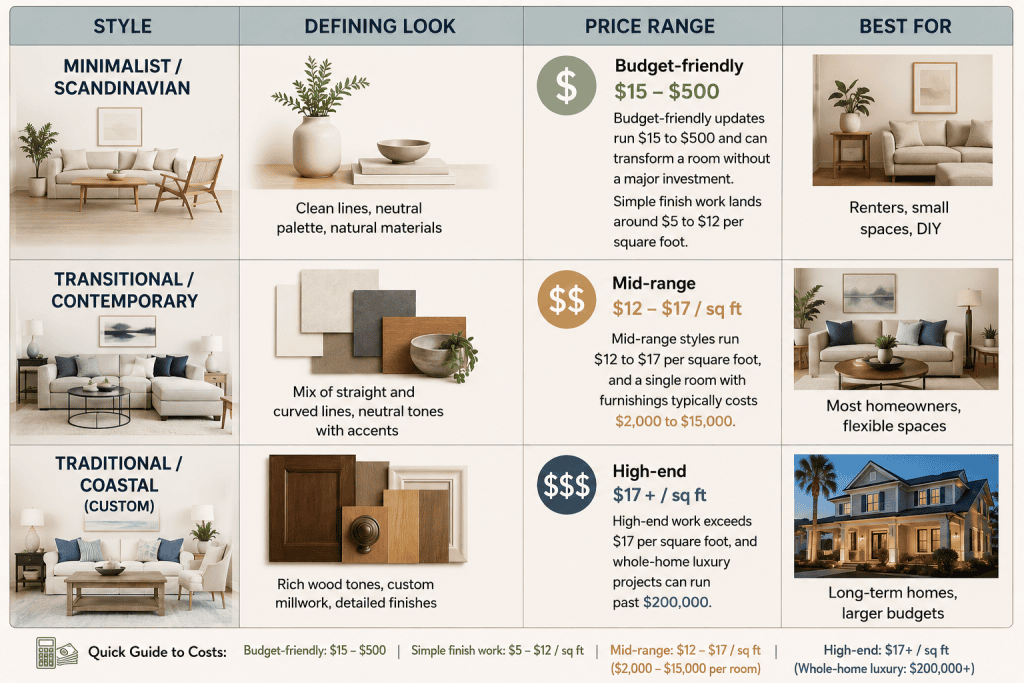
Minimalist and Scandinavian styles suit tighter budgets due to their focus on simplicity. Budget-friendly updates range from USD 15.00 to USD 500.00. Paint transforms rooms inexpensively. You can swap lampshades, add plants and update throw pillows to create an effect without major investment. Simple finish projects cost around USD 5.00 to USD 12.00 per square foot.
Mid-Range Interior Design Styles
Transitional and Contemporary styles fall in mid-range pricing. These incorporate a mix of standard and custom pieces with higher-quality materials. Mid-range finishes cost USD 12.00 to USD 17.00 per square foot. A single room design runs USD 2,000.00 to USD 15,000.00 with furnishings.
High-End Luxury Interior Design Styles
Traditional and Coastal styles with custom elements exceed USD 17.00 per square foot. Luxury projects involve bespoke furniture and custom window treatments with detailed coordination. Whole home luxury projects can exceed USD 200,000.00.
Timeline Expectations for Different Room Sizes
Living rooms or bedrooms require 4-6 months from kickoff to installation. Kitchen remodels take 6 months due to plumbing and electrical complexities. Bathrooms need 3-4 months. Whole home projects stretch 8-12+ months.
When to Hire a Professional Interior Designer
Image Source: House Designer
Knowing the right time to bring in professional help separates successful projects from expensive mistakes. Here’s what matters when you decide between DIY and hiring a designer.
Signs You Need Expert Help with Style Selection
Decision paralysis signals the need for professional guidance. Homeowners face over 400 decisions per designed space. Analysis paralysis prevents progress. Interior designers simplify choices by understanding priorities and curating tailored options.
Structural changes require expert intervention. Moving walls, custom millwork and kitchen remodels involve building codes and technical specifications that most homeowners lack. Designers coordinate with architects and contractors on complex projects.
What Interior Designers Can Do That You Can’t
Designers prevent expensive mistakes through technical knowledge. A minimum of 200 hours goes into a project design. They catch problems before construction starts. Electrical placement gets finalized before tiling. This saves rework costs.
Trade discounts offset design fees. Professionals access wholesale pricing that consumers cannot get. Their supplier networks provide quality materials faster and ensure code compliance with safety standards.
Cost of Hiring vs DIY Approach
Interior design services range from USD 2,000 to USD 15,200 per project. The average is USD 8,500. Hourly rates run USD 100 to USD 500. Online services offer affordable alternatives at USD 159 to USD 2,099.
DIY appears cheaper but hidden costs accumulate. Mistakes in furniture sizing, material selection and layout often exceed professional fees.
Conclusion
Choosing an interior design style comes down to matching your budget and your home’s architecture. Create a mood board first, test your direction with small purchases and then commit to larger investments. Budget-friendly styles like Minimalist and Scandinavian work well for DIY projects under USD 5,000. Traditional and custom designs require professional help and budgets exceeding USD 15,000.
To name just one example, simple room refreshes take 4-6 weeks and suit DIY approaches. Full kitchen remodels need professional coordination and run 6+ months. Choose a style you love rather than chasing trends. This approach saves money and creates spaces that feel right for years.