In this guide
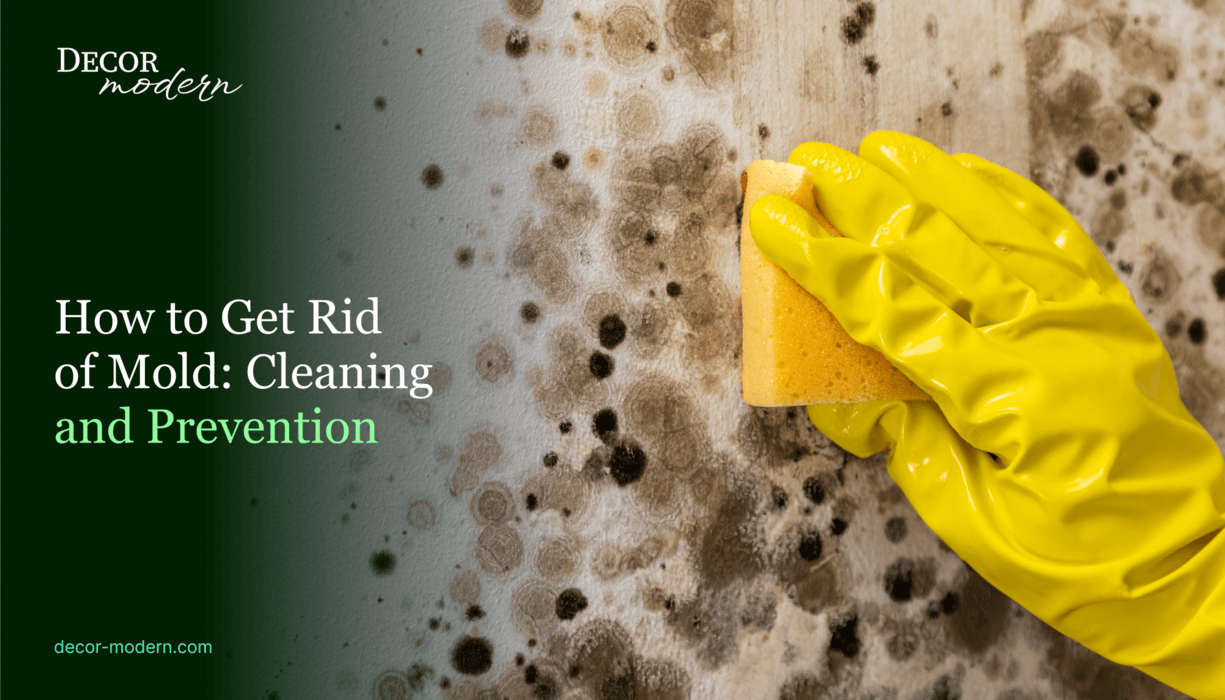
Water is all mold needs. Leaving a wet area unaddressed is dangerous—the growth is almost guaranteed. A small patch in the bathroom corner can spread further before you notice anything is wrong.
When to DIY and when to Call a Professional
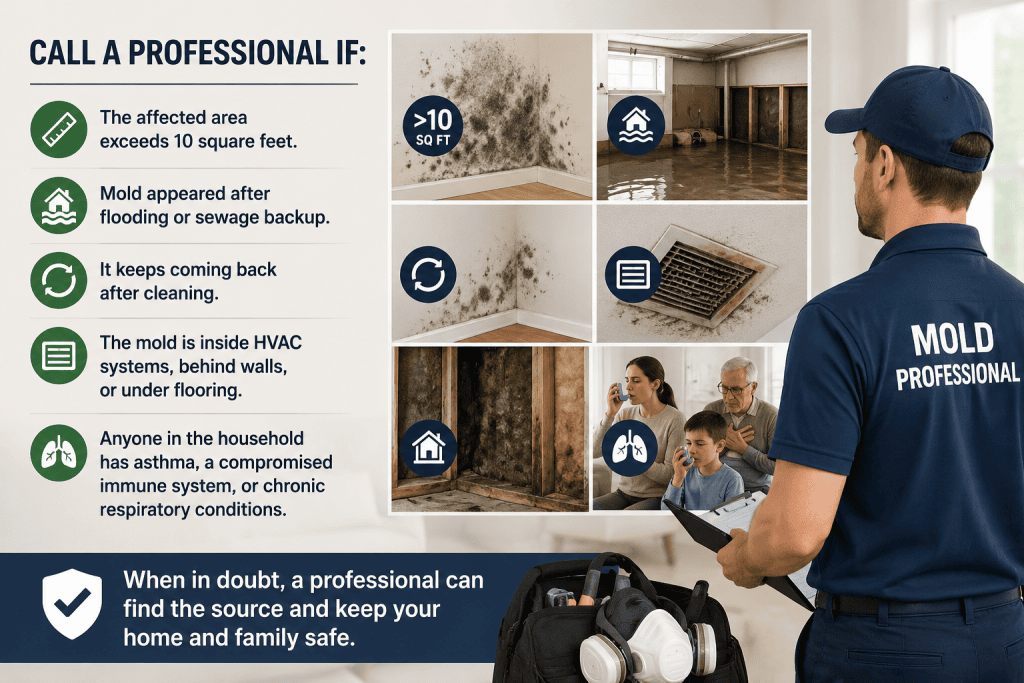
The EPA’s threshold for DIY remediation is 10 square feet—roughly a 3×3-foot patch. Below that, on non-porous surfaces, cleaning it yourself is appropriate. Beyond that, the work requires containment procedures, negative air pressure, and equipment most homeowners don’t have.
Porous materials—drywall, carpet, and insulation—should be replaced rather than cleaned regardless of size if the mold growth is extensive or the material has been wet for more than 48 hours.
What You’re Actually Dealing With
Mold is a fungus which spreads with spores and grows in moist places with moderate temperatures and an organic surface. Drywall, wood, carpet, and wallpaper all count as food sources—moisture is the one variable you can actually control. Any areas with leaking pipes or regular condensation are at risk. The tricky thing is that mold loves establishing behind cabinets, under the floor and other covered places.
| Sign | What it looks like |
| Visible patches | Fuzzy, slimy, or discolored spots that grow over time—black, white, green, brown, or gray |
| Smell | Musty or earthy odor, often appears before any visible growth |
| Surface damage | Water stains, warping, or peeling paint on walls or ceilings |
| Grout and tile | Spotting along grout lines or on tile surfaces |
Safety Before You Start
Gear up before you touch anything. An N-95 respirator is recommended, because standard dust masks don’t filter mold spores effectively enough. When you work with larger areas, choose a half-face or full-face respirator.
Full PPE checklist:
- N-95 or better respirator.
- Non-latex gloves extending to mid-forearm.
- Goggles without open vent holes—safety glasses won’t block spores.
- Long sleeves, long pants, waterproof boots.
The first step is covering floors with drop cloths, closing doors, and covering vents with plastic sheeting. Mist moldy surfaces lightly with water before touching them—it keeps spores from going airborne. Bag all contaminated material in sealed heavy-duty plastic before moving it through the house.
Cleaning by Surface
Painted Drywall
Painted drywall has a protective barrier that limits penetration. Blend 1 part bleach with 3 parts water. Spray the surface lightly—don’t soak it. Allow it to sit for 10–15 minutes, scrub with a brush, then dry with fans. Replace rather than clean if mold covers more than 2 square feet or has worked through the paper facing.
Unpainted Drywall
Mold penetrates unpainted drywall deeply into its porous structure. Cleaning the surface doesn’t reach it. Cut out the contaminated section plus 2 feet beyond the visible growth edge using a utility knife—not a power saw, which spreads spores. Treat the exposed cavity with mold control spray and let it dry completely.
Finished Wood
Vacuum loose spores with a HEPA-vacuum first, then wipe down with a 1:3 white vinegar and water solution. For stubborn staining, apply 3% hydrogen peroxide, leave 10 minutes, then scrub gently.
Unfinished Wood
Mold soaks into the grain of raw wood. Apply undiluted white vinegar and leave it for 60 minutes, or use a borax solution (1 cup per gallon of warm water)—borax creates an alkaline environment that disrupts mold’s cellular structure. Sand deeply stained areas with fine-grit sandpaper as a last resort; wear a respirator during sanding.
Bathroom Tile and Grout
Mix baking soda and water (3:1 ratio) into a paste for grout lines. Scrub it in, then spray undiluted white vinegar and let it react for 15 minutes. A steam cleaner penetrates porous grout better than scrubbing alone. For caulk with persistent black or green spots, scrape it out and replace it—cleaning rarely works once mold is embedded in silicone.
Curtains and Liners
Shower curtain liners can usually be washed in a washing machine. Turn on a hot water cycle with a couple of towels to prevent damage to the liner, and add half a cup of white vinegar to the final rinse cycle.
Hard Non-Porous Surfaces
Scrub with detergent and damp cloth—don’t soak the surface. For outdoor surfaces like brick and stone, a bleach solution (1 cup per gallon of water) works well. Concrete needs a TSP solution (½ cup per gallon of warm water), a stiff brush, a thorough rinse, and a concrete sealer afterward to close the pores.
Whatever the surface, HEPA-vacuum for at least one minute per square foot after cleaning—dead mold fragments stay allergenic and need to come up even after the mold itself is gone.
Surface-by-Surface Quick Reference
| Surface type | DIY or replace | Cleaning method |
| Painted drywall | DIY if <2 sq ft | 1:3 bleach/water or vinegar/water; scrub, dry thoroughly |
| Unpainted drywall | Replace if >2 sq ft or mold through paper layer | Cut out + 2 ft beyond visible growth; treat cavity |
| Finished wood | DIY | Vinegar/water 1:3; hydrogen peroxide for persistent staining |
| Unfinished wood | DIY (sanding as last resort) | Undiluted white vinegar 60 min, or borax solution 1 cup/gal |
| Tile and grout | DIY | Baking soda paste; vinegar; steam cleaner for deep grout |
| Caulk | Replace | Scrape and regrout—cleaning rarely works on black caulk |
| Carpet, insulation | Replace | Cannot be fully cleaned once wet >48 hours |
| Glass, metal, sealed tile | DIY | Detergent + water; bleach 1 cup/gal for outdoor surfaces |
Prevention: Breaking the Cycle
Fix Moisture at the Source
Nothing else matters until the water source is addressed. Dry any water-damaged area within 48 hours. Check that the ground slopes away from your foundation. Clean gutters and direct downspouts at least 6–10 feet from the house. Fix leaking pipes, faucets, and condensing water lines as soon as they appear.
Keep Humidity in Range
Indoor humidity should stay between 30% and 50%—above 60% and mold finds conditions favorable. A basic hygrometer (under $20 at most hardware stores) lets you monitor levels room by room. Dehumidifiers work well in basements and bathrooms; the tank needs emptying regularly or the unit stops working. Air conditioners also dehumidify, but only if they run long enough to do so.
Ventilate Constantly
Bathroom exhaust fans should run during showers and for at least 15 minutes after. Kitchen range hoods need to operate while cooking, particularly when boiling water. Dryers and other moisture-generating appliances must vent outside—never into attics or garages.
Inspect Regularly
Inspect HVAC drain pans, furnace humidifiers, and ductwork a few times a year for leaks or early growth—the same goes for under sinks and around water heaters. Water stains, peeling paint, and warped wall coverings all point to moisture that hasn’t turned into visible mold yet—that’s the stage where it’s cheapest to fix.
Bottom Line
Make sure to fix the water source and clean all around. Keeping humidity below 50% is a main mold solution for residential houses. You can get rid of mold yourself until it’s under 10 sq ft, hidden in HVAC systems, caused by flooding or someone in your house is dealing with serious health problems.
Sources
Every external claim in this guide links to its origin. Collected automatically from the text above.
- Leaving a wet area unaddressed — epa.gov
- in moist places with moderate temperatures and an organic surface — cdc.gov
- between 30% and 50% — epa.gov

John Adams
John writes about home systems — HVAC, plumbing, electrical, and water heaters — for Decor Modern. His articles help homeowners understand the infrastructure behind their walls before something breaks and the repair bill arrives. John's background is in residential maintenance and facilities management. He spent six years overseeing day-to-day upkeep of multi-unit residential properties, handling everything from boiler failures to bathroom renovations. He was responsible for maintaining building systems across multiple residential units, including HVAC, plumbing, and electrical infrastructure. He learned the hard way that most homeowner emergencies start as small problems that nobody noticed in time — which is why his articles focus as much on diagnosis and prevention as on repair. His experience includes diagnosing system failures, coordinating repairs, and managing preventative maintenance to avoid costly emergencies. On Decor Modern, he's the author of the HVAC 101 and Plumbing 101 guides, the water heater warning signs article, and the bathroom renovation cost breakdowns. His approach: explain the system first, then the fix, then the cost. In that order. He focuses on helping homeowners recognize early warning signs before small issues turn into major repairs. John is based in North Carolina, where summer humidity gives him no shortage of material to write about.