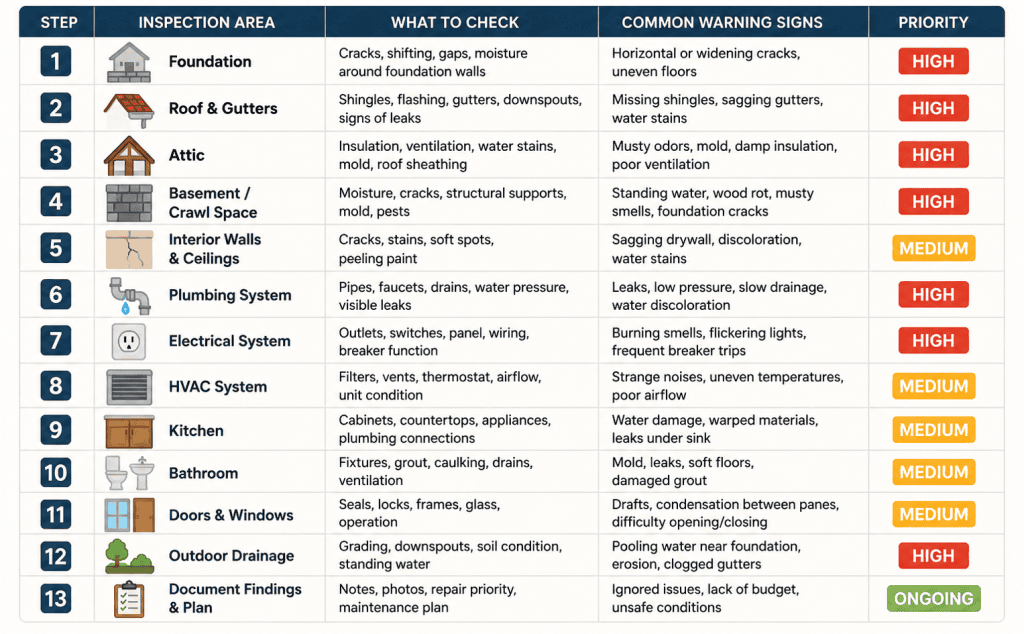
Professional house inspections cost between $281 and $402, but you can catch many common problems yourself before they become expensive. Most inspectors find roofing damage, HVAC failures and structural concerns during standard checks. Understanding what to look for in a home inspection helps you spot warning signs early and make informed repair decisions. This house inspection checklist walks you through 13 steps and covers foundation cracks to drainage problems. You retain control when you know how to do your own home inspection, whether you’re preparing to sell or maintaining your property.
Step 1: Inspect the Foundation and Exterior Walls

Image Source: Level Engineering
Your foundation supports the entire structure and serves as the starting point for any house inspection checklist. Walk the full perimeter of your home and examine both the foundation and exterior walls for visible damage.
What to Check
Begin with a visual examination of foundation walls. Look for cracks, discoloration, or texture changes. Use a level tool to check for bulging or leaning sections. Basements and crawl spaces need wall inspections for moisture signs, efflorescence (white chalky deposits from water seepage), and any inward bowing. Check where different materials meet, such as where the chimney connects to the house or where siding meets the foundation. Gaps at these junctions often indicate movement.
Examine the cladding material for cracks, deterioration, or pieces in contact with soil when you inspect exterior walls. Wood siding that touches ground level invites moisture damage and pest problems. Check that gutters direct water away from the foundation as well. Poor drainage saturates soil and creates pressure against basement walls.
Common Problems to Look For
Crack patterns tell different stories. Vertical cracks are less concerning than horizontal or diagonal ones. Stair-step cracks in brick or block walls often indicate foundation settlement. Horizontal cracks signal serious lateral pressure from soil that pushes against the wall. Diagonal cracks that extend from window or door corners suggest differential settlement, where one part of the foundation sinks more than another.
Bowing walls occur when soil pressure becomes excessive, often due to inadequate drainage or clay soil expansion. Clay soils swell when saturated and push against basement walls. This creates weak spots over time. Rainwater oversaturates soil near the foundation in many homes without proper gutter systems and leads to this continuous expansion and contraction cycle.
Red Flags and Warning Signs
Cracks wider than 1/4 inch just need professional evaluation. Horizontal cracks in basement walls, cracks that are growing, or any crack accompanied by wall displacement all need immediate attention. Bowing that exceeds 3/8 inch creates potentially unsafe conditions, especially in older homes built before the 1950s without rebar reinforcement.
Foundation walls that show large separations between block layers where bowing occurred indicate structural failure risk. Water infiltration through foundation cracks leads to mold growth and accelerated deterioration. Multiple cracks in various locations throughout the foundation suggest stress or settlement that requires professional assessment.
Step 2: Examine the Roof and Gutters
Roof and gutter problems account for much of water damage claims, yet many homeowners overlook these areas during routine maintenance. Start your roof inspection from ground level using binoculars to scan for visible damage without risking falls.
What to Check
Walk your home’s perimeter and get into shingles for missing pieces, curling edges, or bald spots where granules have worn away. Look for dark streaks that indicate algae growth or moss in shaded areas. Check flashing around chimneys, vents, and skylights for cracks, rust, or gaps where water can penetrate. A 1,000 square foot roof sheds about 620 gallons of water during a 1-inch rainfall and makes gutter function critical.
Inspect gutters for debris accumulation, sagging sections, and slope. Gutters should slope toward downspouts at 1/16-inch per foot. Check that downspouts discharge water 4 to 6 feet away from your foundation. Look inside gutters for shingle granules, which signal deteriorating roofing material. Check gutter hangers for looseness and seams for separation or rust.
Common Problems to Look For
Missing or damaged shingles expose underlayment to moisture and increase leak risk and energy costs. Shingles over 20 years old often show curling, cupping, or granule loss. Flashing deterioration creates entry points for water at roof penetrations.
Clogged gutters trap moisture and debris. This creates breeding grounds for mosquitoes and pests. Leaves and twigs prevent drainage and cause water to overflow and pool around foundations. Sagging gutters result from loose or damaged hangers unable to support debris weight. Metal gutters develop corrosion and rust over time. This leads to holes and leaks. Clogged gutters prevent melting snow from draining in colder climates and force water back under shingles to form ice dams.
Red Flags and Warning Signs
Call a professional if you notice water stains on interior ceilings, peeling paint near rooflines, or daylight visible through attic boards. Multiple missing shingles require immediate attention, especially after storms. Horizontal cracks in flashing or extensive rust indicate failure points. Gutters pulling away from the house, standing water in gutter channels, or water marks on exterior siding beneath gutters signal drainage system failure that requires prompt repair.
Step 3: Check the Attic Space
Attics reveal problems that remain invisible from ground level and make them key stops on any do it yourself home inspection checklist. Homeowners often skip attic checks because accessing them feels inconvenient, yet moisture problems, ventilation failures and structural concerns show up here first.
What to Check
Bring a flashlight, moisture meter, dust mask and safety glasses before entering. Once inside, inspect roof sheathing and rafters for water stains, which appear as yellow, brown or dark patches. Check insulation depth and condition. Note any damp, compressed or missing sections. Attics with HVAC systems need ductwork inspection to ensure proper insulation and sealing, as humid air contacting cooler surfaces creates condensation that drips onto insulation and wood structures.
Ventilation assessment just needs checking soffit vents at eaves and ridge vents at roof peaks for blockages. Soffit vents pull air from the lowest attic point while ridge vents exhaust at the highest point. Verify bathroom and kitchen exhaust fans vent outside through the roof or exterior walls, not into the attic space. Look for adequate insulation depth by comparing it to floor joists. You need more if insulation sits level with or below joists.
Common Problems to Look For
Poor ventilation causes multiple problems. Frost accumulates on roof decking undersides during winter in colder climates, melting as temperatures rise and creating moisture problems. Blocked soffit vents from debris, insulation or birds’ nests prevent air circulation. Bathroom fans venting into attics introduce warm, damp air that condenses on cold surfaces and create problems.
Inadequate insulation allows warm air movement that triggers condensation on cold roof sheathing. Black stains on insulation indicate air filtering through gaps and signal air leakage from living spaces below. To cite an instance, unsealed openings around exhaust fans, recessed lights and speakers let conditioned air escape into attics.
Red Flags and Warning Signs
Musty odors signal mold growth from trapped moisture. Rust on nails, fasteners or metal components indicates excess humidity. Sagging roof decking or visible mold needs immediate professional evaluation. Water stains on ceilings below the attic, damp insulation or daylight visible through roof boards demand prompt action. Listen for dripping sounds during or after rain, which pinpoint active leak locations.
Step 4: Inspect Basement and Crawlspaces
Basements and crawlspaces harbor moisture problems that migrate upward into living spaces. They are critical checkpoints on your diy home inspection checklist. Up to half the air in your home originates from these areas, and conditions below affect indoor air quality above.
What to Check
Access openings should measure at least 18 inches by 24 inches for floor hatches or 24 inches by 16 inches for perimeter wall openings. Bring a flashlight, moisture meter and dust mask before you enter. Start with floor joists and beams overhead. You want clean, straight boards without dampness, cracks or sagging. Discoloration signals mildew, especially if the area feels damp.
Check foundation walls for cracks and pay attention to patterns. Review exposed pipes for leaks or corrosion. Test water heaters, which last 8 to 12 years before leaking. Verify a vapor barrier covers exposed soil in crawlspaces and check for rips or tears. Use a humidity tester to confirm levels between 30-50% for basements. Relative humidity above 60% attracts pests, mildew and biological contaminants.
Common Problems to Look For
Moisture enters through ground vapor, foundation cracks, plumbing leaks or HVAC condensation. Water stains appear as yellow spots on walls and show persistent seepage. Efflorescence, those white chalky deposits, forms where water evaporates through masonry. Wood moisture content exceeding 20% triggers decay fungi. This leads to sagging floors and structural weakening.
Musty odors indicate mold growth in damp conditions. Termites and rodents thrive in moisture-rich environments and cause structural damage often unnoticed until severe. To cite an instance, two rats multiply to over a thousand in one year.
Red Flags and Warning Signs
Horizontal or stair-step cracks signal foundation stress that requires professional evaluation. Bowing walls, standing water or visible mold demand immediate attention. Sagging floor joists, especially those pulling away, indicate structural failure. Call a professional if you notice persistent dampness, extensive pest droppings or compromised support beams.
Step 5: Evaluate Interior Walls and Ceilings

Image Source: Restorations by Highmark
Walk through your rooms with a notebook during daylight hours when natural light reveals imperfections your artificial lighting might miss. Interior walls and ceilings show early warning signs of structural stress, moisture intrusion and settling issues that often go unnoticed until damage gets pricey.
What to Check
Start at ceiling corners where walls meet and look for gaps or separations. Press on ceiling surfaces to detect soft spots that indicate water damage. Examine walls for cracks and note their location, direction and width. A crack wider than 1/16 inch needs closer inspection. Use a coin as a quick gage. If it fits sideways into a crack, call a professional.
Check for water stains that appear as yellow, brown or copper-colored spots. Look for peeling paint, bubbling wallpaper or texture changes. Rooms below bathrooms or kitchens need ceiling inspection for discoloration. Examine door and window frames for gaps that weren’t visible before. Run your hand along wall-ceiling junctions and feel for separation.
Common Problems to Look For
Hairline cracks less than 1/16 inch result from normal settling. Straight cracks following drywall seams indicate poor workmanship during installation. Diagonal cracks suggest structural movement. Cracks shaped like stair steps signal foundation issues.
Water stains indicate active or past leaks from roof damage, plumbing failures or HVAC condensation. Sagging ceilings often start as small bumps and mean water has accumulated and weakened ceiling materials. Peeling paint or blistering drywall points to moisture problems. Gaps between walls and ceilings can result from foundation settlement or improper joint tape application.
Red Flags and Warning Signs
Cracks wider than 3 millimeters just need immediate attention. Cracks extending from ceiling down walls indicate serious structural damage. Multiple cracks appearing in one area paired with sagging signal potential collapse risk. Water stains accompanied by musty odors suggest mold growth. Soft spots when pressing on ceilings mean structural compromise. Horizontal cracks or fissures spreading faster just need professional evaluation.
Step 6: Test the Plumbing System
Testing your plumbing system reveals hidden problems before small leaks turn into water damage that gets pricey. Start by attaching a pressure gage to an outdoor faucet to measure water pressure, which should fall between 40 and 80 PSI. Readings above 75 PSI strain pipes and fixtures. Pressure below this range signals blockages, leaks, or supply line issues.
What to Check
Begin with visible pipe inspections under sinks, in basements, and behind appliances. Look for water collecting, wet areas, or green and white mineral buildup around connections that suggest hard water deposits or slow leaks. Check exposed pipes for rust, discoloration, or corrosion. Test each faucet by running both hot and cold water. Note flow strength and consistency. Flush toilets multiple times to check refill speed. Run showers and observe water temperature fluctuations, which suggest corroded valves or anti-scald mechanisms.
Get into water quality beyond fixture performance. Discolored water appears rusty, brown from deteriorated steel pipes, or blue-green from old copper lines. Metallic taste or smell signals bits of corroded metal traveling through pipes. Test drainage speed in sinks, tubs, and showers. Watch for slow draining or gurgling sounds.
Common Problems to Look For
Low water pressure results from sediment buildup as rust flakes accumulate in pipe turns and joints. This narrows passages and restricts flow. Corrosion eats through pipe walls until water escapes and lowers pressure at faucets. Clogs from mineral deposits cause persistent blockages as pipe interiors narrow. Leaky fixtures waste hundreds of gallons each year. Dripping faucets suggest worn washers that just need replacement.
Red Flags and Warning Signs
Call a professional for water stains on ceilings or walls, musty odors that suggest hidden leaks, or sudden water bill spikes without increased usage. Persistent pressure drops, discolored water paired with metallic odors, or visible pipe corrosion just need attention right away.
Step 7: Assess the Electrical System
The Consumer Product Safety Commission recommends having a professional inspect your electrical system every 10 years, yet most homeowners wait until problems arise. Electrical malfunctions cause more than 50,000 house fires annually and make this inspection step critical for safety.
What to Check
Start at your electrical panel and check for adequate clearance of at least 36 inches in front. The panel should feel cool to the touch and emit no sounds. Open the panel door and look for rust, corrosion, or scorch marks that show overheating. Verify all circuit breakers are labeled properly and test each one by flipping it off and back on. Sticky or immovable breakers need replacement right away.
Walk through each room and test outlets. Plug a lamp into every outlet to confirm it works. Outlets should fit plugs snugly without looseness. Check that all outlets have faceplates covering wiring. Press your hand against outlet covers; warmth means overloading or faulty wiring that requires an electrician’s attention. Test GFCI outlets monthly by pressing the “Test” button, which should cut power, then “Reset” to restore it. GFCIs belong in bathrooms, kitchens, garages and outdoor locations.
Check light fixtures for proper bulb wattage by reading the maximum rating printed inside each fixture. Higher wattage bulbs overheat fixtures and nearby materials, which creates fire risk. Inspect all electrical cords for fraying, cracks or exposed wires. Extension cords should never run under rugs or furniture.
Common Problems to Look For
Overloaded circuits show distinct patterns. Lights dim or flicker when large appliances turn on. Breakers trip often during normal use. Outlets feel warm without devices plugged in. These signs mean circuits are carrying more current than their designed capacity.
Red Flags and Warning Signs
Call an electrician right away if you smell burning odors from outlets or panels, hear buzzing or crackling sounds, or notice sparking. Flickering lights paired with burning smells signal dangerous wiring conditions. Homes built before 1980 without recent inspections need professional evaluation.
Step 8: Inspect the HVAC System
HVAC inspections typically take 60 to 90 minutes and should occur twice yearly, in spring for cooling systems and fall for heating systems. Homeowners can check several components to catch problems early between professional tune-ups.
What to Check
Start with your thermostat and test it in both heating and cooling modes to confirm accurate temperature readings. Replace batteries if applicable and verify programming settings match your schedule. Locate your air filter and check it for dust buildup; filters trap debris and require replacement every three months, or more often with pets or allergies. Dirty filters restrict airflow and reduce efficiency by up to 15 percent.
Walk outside to your condenser unit and clear leaves, grass, or debris within two feet. Check that condensate drain lines flow without obstruction; clogs cause water damage and system shutdowns. Inside, inspect visible ductwork for gaps, tears, or disconnections. Seal leaks with metal foil tape designed for HVAC applications.
Common Problems to Look For
Thermostat malfunctions from dead batteries, incorrect settings, or wiring issues prevent systems from maintaining desired temperatures. Refrigerant leaks reduce cooling power and damage compressors. Blocked or leaking ducts create uneven heating or cooling and increase energy bills. Neglecting regular maintenance reduces efficiency and causes potential system failures.
Red Flags and Warning Signs
Call a professional if you notice banging, rattling, or squealing sounds showing loose parts or motor issues. Musty odors suggest mold in ducts, while burning smells point to electrical problems. Uneven room temperatures, sudden energy bill spikes, or systems cycling on and off without pause signal issues requiring expert diagnosis.
Step 9: Review Kitchen Components
Kitchens contain multiple water sources and enclosed spaces where damage hides until problems become expensive. Open cabinet doors throughout the kitchen and get into hinges to check proper alignment. Doors that stick, won’t close fully, or rub against each other signal moisture damage or structural settling. Look for water stains, discoloration, or musty odors inside cabinets, especially under sinks. These signs suggest current or past leaks. Cabinet materials like particle board and MDF absorb water slowly and swell internally while appearing fine on the outside.
What to Check
Get into cabinet boxes at toe kicks, where they meet walls, and behind visible faces. Run your hand along interior surfaces to find dampness or soft spots. Check countertop backsplashes for gaps between the wall and counter that invite moisture penetration. Test built-in appliances including microwaves, garbage disposals, and range hoods to see if they work. Run the dishwasher on a short cycle and watch to spot leaks. Verify range hoods vent correctly and filters aren’t too dirty.
Common Problems to Look For
Cabinet doors misaligned or warped from moisture exposure often appear months after water contact. Peeling finish near floors signals water damage from leaks or excessive humidity. Poorly sealed backsplashes allow water behind counters and damage cabinet structures below. Garbage disposals making unusual noises or leaking require attention before causing cabinet water damage.
Red Flags and Warning Signs
Soft cabinet bottoms, especially under sinks, indicate structural compromise that requires replacement. Mold inside cabinets, drawer sticking, or musty smells demand immediate professional evaluation. Composite materials rarely recover from water damage.
Step 10: Examine Bathroom Fixtures

Image Source: InterNACHI
Bathrooms concentrate water use in small spaces where fixture failures quickly damage floors, walls and subfloors. Many homeowners overlook gradual deterioration until repair bills exceed $10,000 for rotted subfloors. Test water pressure across fixtures at the same time. Flush the toilet while running the shower and sink faucet to confirm pressure stays consistent.
What to Check
Check faucets and showerheads for drips or leaks at connections. Look under sinks for water stains, dampness or warped cabinet materials that show past leaks. Test toilet stability by pressing sideways with your leg. Movement signals loose floor bolts or a damaged wax ring that needs replacement. Run all fixtures and watch drain speed. Water pooling in tubs or sinks points to hair and soap buildup deeper in lines.
Look at grout between tiles and caulk around tub edges. Cracked or missing sealant allows water behind walls where mold grows unnoticed. Bathroom fans must vent outside, not into attics or ceilings. Test GFCI outlets monthly using the test button.
Common Problems to Look For
Toilets that wobble, run without stopping or leak around the base need attention right away. Recurring drain clogs show blockages sitting deeper in pipes. Low pressure from mineral buildup or worn fixtures makes daily tasks frustrating. Grout absorbs moisture through microscopic pores and creates mold hotspots in corners and seams.
Red Flags and Warning Signs
Soft or spongy floors near toilets signal subfloor rot from wastewater leaks. Musty odors that return after cleaning show hidden mold growth. Peeling paint, bubbling drywall or loose tiles suggest water penetration that needs professional evaluation.
Step 11: Check Doors and Windows

Image Source: Muhler
Windows account for up to 25 percent of your home’s heat loss. This makes seals and operation critical for energy efficiency. Gather a flashlight, screwdriver, tape measure, and utility knife before starting your inspection.
What to Check
Get into frames for cracks, warping, or rot. Pay attention to peeling paint showing moisture problems. Check glass panes for cracks or chips. Fogging between panes on double-pane windows signals seal failure and escaped insulating gas. Test each window’s operation. They should move smoothly without sticking or unusual sounds. Inspect weatherstripping for cracks, compression, or gaps that allow drafts.
Check door alignment by looking for uneven gaps or dragging along the bottom. Test locks and handles for function. Run your hand along frames and feel for air movement, especially at thresholds where light sneaks through.
Common Problems to Look For
Broken seals in double-pane windows reduce insulating properties through condensation between panes. Worn weatherstripping creates drafts that increase energy costs. Door misalignment from sagging hinges or house settling leaves gaps for cold air. Single-pane windows lack modern insulation features.
Red Flags and Warning Signs
Condensation between window panes means you just need glass replacement. Water stains on sills, mold growth, or moisture that won’t go away indicate problems requiring attention from a professional. Doors difficult to open or close signal structural issues.
Step 12: Inspect Outdoor Areas and Drainage
Poor drainage causes foundation damage faster than most homeowners realize. Water pooling near your home can start damaging structural elements in as little as 24 to 48 hours. Walk your property after rainfall and identify problem areas before expensive repairs become necessary.
What to Check
Begin to explore yard grading within 10 feet of your foundation. Soil should slope away from the house at least 6 inches over the first 10 feet. Use a level and verify the slope directs water outward. Check areas within 2 to 3 feet of your foundation after several dry days. Water isn’t draining if soil feels soft, spongy, or damp.
Verify downspouts discharge at least 4 to 6 feet from your foundation. Look for standing water in low spots, along walkways, or near the foundation. Water that remains more than 24 hours after rain signals drainage failure.
Common Problems to Look For
Improper grading slopes toward homes rather than away and pools water at foundations. Compacted clay soil prevents water absorption and creates surface pooling. Clogged gutters overflow and saturate soil near foundations. Erosion creates ruts, exposes tree roots, and washes away topsoil. Short downspout extensions dump water against foundations.
Red Flags and Warning Signs
Foundation cracks, musty basement smells, or visible mold indicate water infiltration that requires immediate attention. Subsurface drainage problems need professional French drain installation if standing water persists despite clear gutters.
Step 13: Document Findings and Create Action Plan
Recording findings during your house inspection prevents overlooking problems weeks later at the time memory fades. Homeowners who document issues avoid the buyer’s remorse affecting 78% of recent purchasers, from unexpected repair costs.
How to Organize Your Findings
Read your inspection report’s summary section first. It expresses critical issues and provides a quick condition overview. Categorize findings by severity: safety hazards and major defects. Keep your report to reference later as it serves as a valuable maintenance roadmap to plan renovations or future transactions. So, create a digital diary for your home and track appliance details, renovation logs and contractor contacts.
Prioritizing Repairs and Maintenance
Separate top priority items that require immediate attention: structural concerns, active leaks and electrical hazards. Medium priority issues include HVAC systems nearing end-of-life and plumbing wear. Lower priority covers cosmetic faults and normal wear-and-tear. Set aside 1% of your home’s purchase price annually to budget for maintenance and repairs. In fact, 67% of homeowners who experienced repair issues admit problems could’ve been prevented with proactive maintenance.
At the Time to Call a Professional
Bring in specialists for foundation concerns that require structural engineers, electrical hazards that need licensed electricians, or complex HVAC problems that demand technician evaluation. These additional inspections cost extra but provide detailed repair estimates critical to make decisions.
Comparison Table: 13 Essential House Inspection Steps
| Step | Main Focus | Key Items to Check | Common Problems | Red Flags/Warning Signs | When to Call Professional |
| Step 1: Foundation and Exterior Walls | Foundation integrity and structural support | Foundation cracks, discoloration, bulging/leaning sections, moisture signs, efflorescence, exterior wall cladding, drainage | Vertical cracks (less concerning), horizontal/diagonal cracks (serious), stair-step cracks in brick, bowing walls from soil pressure, clay soil expansion | Cracks wider than 1/4 inch, horizontal basement cracks, cracks that grow over time, bowing that exceeds 3/8 inch, multiple cracks at different locations | Foundation walls with large separations, structural failure risk, water infiltration with mold growth |
| Step 2: Roof and Gutters | Roof condition and water drainage | Missing/damaged shingles, curling edges, granule loss, flashing around chimneys/vents, gutter debris, sagging sections, downspout discharge (4-6 feet from foundation) | Shingles over 20 years old that show deterioration, clogged gutters that trap moisture, sagging from loose hangers, metal corrosion, ice dams in cold climates | Water stains on interior ceilings, peeling paint near rooflines, daylight through attic boards, multiple missing shingles, gutters pulling away from house | Heavy rust in flashing, drainage system failure, water marks on exterior siding that won’t go away |
| Step 3: Attic Space | Moisture, ventilation, and insulation | Roof sheathing/rafters for water stains, insulation depth and condition, HVAC ductwork sealing, soffit and ridge vents, exhaust fan venting | Poor ventilation that causes frost buildup, blocked soffit vents, bathroom fans venting into attic, inadequate insulation, air leakage from living spaces | Musty odors that suggest mold, rust on nails/fasteners, sagging roof decking, visible mold, water stains on ceilings below attic | Sagging roof decking, mold growth that covers large areas, damp insulation, dripping sounds during/after rain |
| Step 4: Basement and Crawlspaces | Moisture control and structural integrity | Floor joists and beams (straight, no dampness), foundation wall cracks, exposed pipes, water heater condition, vapor barrier coverage, humidity levels (30-50%) | Ground vapor moisture, foundation cracks, plumbing leaks, wood moisture over 20% that triggers decay, musty odors, termites and rodents | Horizontal or stair-step cracks, bowing walls, standing water, visible mold, sagging floor joists pulling away | Dampness that won’t go away, pest droppings everywhere, compromised support beams, structural failure signs |
| Step 5: Interior Walls and Ceilings | Structural stress and moisture intrusion | Ceiling corner gaps, soft spots, wall cracks (location/direction/width), water stains, peeling paint, door/window frame gaps | Hairline cracks from settling, straight cracks at drywall seams, diagonal cracks from structural movement, stair-step cracks from foundation issues | Cracks wider than 3mm, cracks that extend from ceiling down walls, multiple cracks with sagging, soft spots when pressing ceilings | Horizontal cracks, fissures that spread faster, water stains with musty odors that suggest mold |
| Step 6: Plumbing System | Water pressure and leak detection | Water pressure (40-80 PSI), visible pipes for leaks/corrosion, faucet flow, toilet refill speed, water quality/discoloration, drainage speed | Low pressure from sediment buildup, corrosion eating through pipes, mineral deposit clogs, leaky fixtures that waste water | Water stains on ceilings/walls, musty odors from hidden leaks, sudden water bill spikes, pressure drops that keep happening | Discolored water with metallic odors, visible pipe corrosion, leaking that needs immediate repair |
| Step 7: Electrical System | Safety and fire prevention | Panel clearance (36 inches), rust/corrosion/scorch marks, circuit breaker labels and function, outlet functionality, GFCI testing, proper bulb wattage, cord condition | Overloaded circuits that cause dimming lights, frequent breaker trips, warm outlets, improper wiring | Burning odors from outlets/panels, buzzing/crackling sounds, sparking, flickering lights with burning smells | Homes built before 1980 without recent inspections, dangerous wiring conditions, electrical issues that keep coming back |
| Step 8: HVAC System | Heating/cooling efficiency and maintenance | Thermostat accuracy, air filter condition (replace every 3 months), condenser unit clearance (2 feet), condensate drain flow, ductwork sealing | Thermostat malfunctions, refrigerant leaks, blocked/leaking ducts, reduced efficiency from neglected maintenance | Banging/rattling/squealing sounds, musty odors that suggest mold, burning smells, uneven room temperatures, constant cycling | Motor issues, electrical problems, underlying issues that cause sudden energy bill spikes |
| Step 9: Kitchen Components | Water damage and appliance function | Cabinet door alignment, water stains under sinks, countertop backsplash gaps, built-in appliance operation, dishwasher leaks | Misaligned/warped cabinet doors from moisture, peeling finish near floors, poorly sealed backsplashes, garbage disposal issues | Soft cabinet bottoms (especially under sinks), mold inside cabinets, drawer sticking, musty smells | Structural compromise that needs replacement, composite materials damaged by water |
| Step 10: Bathroom Fixtures | Water containment and fixture integrity | Water pressure consistency, faucet/showerhead leaks, under-sink dampness, toilet stability, drain speed, grout/caulk condition, GFCI outlets | Wobbly toilets, continuous running, recurring drain clogs, low pressure from mineral buildup, grout that absorbs moisture | Soft/spongy floors near toilets that suggest subfloor rot, musty odors that return after cleaning, peeling paint, bubbling drywall | Hidden mold growth, water penetration that needs professional evaluation, wastewater leaks |
| Step 11: Doors and Windows | Energy efficiency and proper operation | Frame cracks/warping/rot, glass pane condition, double-pane seal integrity, smooth operation, weatherstripping condition, door alignment, lock function | Broken seals in double-pane windows, worn weatherstripping that creates drafts, door misalignment from sagging hinges, single-pane windows | Condensation between window panes, water stains on sills, mold growth, moisture that won’t go away, doors difficult to open/close | Seal failure that needs glass replacement, structural issues causing door problems |
| Step 12: Outdoor Areas and Drainage | Foundation protection through proper drainage | Yard grading (6-inch slope over 10 feet), soil condition near foundation, downspout discharge (4-6 feet away), standing water after rain | Improper grading that slopes toward home, compacted clay soil that prevents absorption, clogged gutters, erosion, short downspout extensions | Foundation cracks, musty basement smells, visible mold, standing water that stays despite clear gutters | Water infiltration issues, subsurface drainage problems that need French drain installation |
| Step 13: Document Findings and Create Action Plan | Organizing and prioritizing repairs | Report summary section, categorizing by severity (safety/major/minor), digital home diary, appliance details, contractor contacts | Lack of documentation that leads to forgotten issues, unclear repair priorities, inadequate budgeting (need 1% of home value each year) | Safety hazards, active leaks, electrical hazards, roof problems, structural concerns that need immediate attention | Foundation concerns (structural engineers), electrical hazards (licensed electricians), complex HVAC problems (technicians) |
Key Cost and Time:
- Professional house inspections: $281-$402
- HVAC inspections: 60-90 minutes
- Annual maintenance budget: 1% of home’s purchase price
- Bathroom repair costs (if neglected): Can exceed $10,000 for rotted subfloors
- 67% of homeowners admit repair problems could’ve been prevented with proactive maintenance
Conclusion
All things considered, these 13 inspection steps put you in control of your home’s condition before small issues become pricey emergencies. Professional inspections cost $281 to $402. You can save thousands in repair bills by catching problems yourself through routine checks. Note that you should document everything you find and prioritize repairs by severity. Foundation cracks and electrical hazards require licensed professionals right away. Other issues you can monitor over time. Homeowners who budget 1% of their home’s value annually to maintain it and perform these inspections twice yearly avoid the pricey surprises that catch most buyers off guard typically.
FAQs
Q1. What are the most serious issues found during home inspections? The most critical problems include foundation cracks wider than 1/4 inch, horizontal basement wall cracks, active roof leaks, electrical hazards like burning odors or sparking outlets, and structural issues such as sagging floor joists. These require immediate professional attention to prevent safety risks and costly damage.
Q2. How often should homeowners inspect their homes? Homeowners should perform basic inspections twice yearly—once in spring to check cooling systems and once in fall for heating systems. Additionally, inspect after major storms and schedule professional HVAC inspections every 10 years for electrical systems, with annual maintenance budgeting at 1% of your home’s value.
Q3. What are the warning signs of foundation problems? Look for cracks wider than 1/4 inch, horizontal or stair-step crack patterns in basement walls, bowing walls exceeding 3/8 inch, gaps between walls and ceilings, doors that stick or won’t close properly, and water stains or musty odors in basements indicating moisture infiltration.
Q4. How can I tell if my plumbing system has issues? Check for water pressure between 40-80 PSI, look for visible leaks or corrosion on exposed pipes, test all faucets for consistent flow, watch for slow draining sinks or toilets, and monitor for discolored water, metallic tastes, or sudden increases in your water bill without increased usage.
Q5. When should I call a professional instead of doing my own inspection? Contact licensed professionals immediately for foundation concerns requiring structural engineers, electrical hazards like persistent burning smells or sparking, complex HVAC problems, soft or spongy bathroom floors indicating subfloor rot, visible mold growth, or any safety-related issues that could pose immediate danger.